The About page now opens with a short deck about the problems the firm works on
A nine-slide deck at the top of About starts from what people are stuck on, says what the firm does about each, and ends with who to write to.


We turn unusual ideas into books, open tools, research, patents, software, companies and investments.
We've been creating for a while: patents filed since 2002, marks in use since 1998, papers in journals since 2022, essays since 2022, posts since 2024. Our clients include the U.S. Federal Government and their Prime Contractors, Fortune 500, non-profits and many others.
A nine-slide deck at the top of About starts from what people are stuck on, says what the firm does about each, and ends with who to write to.
This paper argues that AI-prepared dashboards and digests add information faster than people can act on it, and proposes a Decisions & NBA Board: a short queue of decisions, each with cited evidence, options, an owner with authority and a dated check on the result. It matters because a report that changes no decision is a cost. No hypothesis has been tested.
This paper proposes a field-testable operating model for CTOs: one traceable evidence base that executive peers can inspect for their own jobs without relying on the CTO's persuasion. It matters because senior leaders often judge engineering by remembered incidents and impressions. The six hypotheses have not been tested.
This paper proposes Olive Button, a Blue Button-style FHIR implementation pattern for DD214 service data that helps meet the 30-, 120-, and 180-day mandates of Executive Order 14426 using existing systems and standards. It matters because the order now requires records sharing at separation. The FHIR mapping is an implementation hypothesis, and the order does not mandate FHIR.
What's new collects releases, papers, episodes and essays in one dated feed, newest first, with filters by area and kind and an Atom feed.
Worksheets, field tools, coaching guides and sources that belong on a screen now live at a stable address beside each book, starting with The Code Takes Care of Itself.
Intellectual Frontiers Press
Intellectual Frontiers publishes working manuals for the people who build, buy, and run critical systems.

How Buyers Tell Real Advantage From a Good Demo

A No-BS Guide to Building & Buying Digital Health
How Native AI Makes Software Sovereignty Practical
Setting Up the Repository and Building the Inputs for an AI Workforce That Finds Who Is Ready to Act

How Executives Find and Fund What Sets Their Company Apart

A Fieldbook for Being Found by the Humans and AI Assembling Complex Supply Chains
A Fieldbook for Turning Clinical Value into Something a Health System Can Actually Buy
A Fieldbook for Finding Leakage, Coaching Performance, and Building a More Resilient Dealership

How Small Firms Find Public Buyers Who Can Buy Now
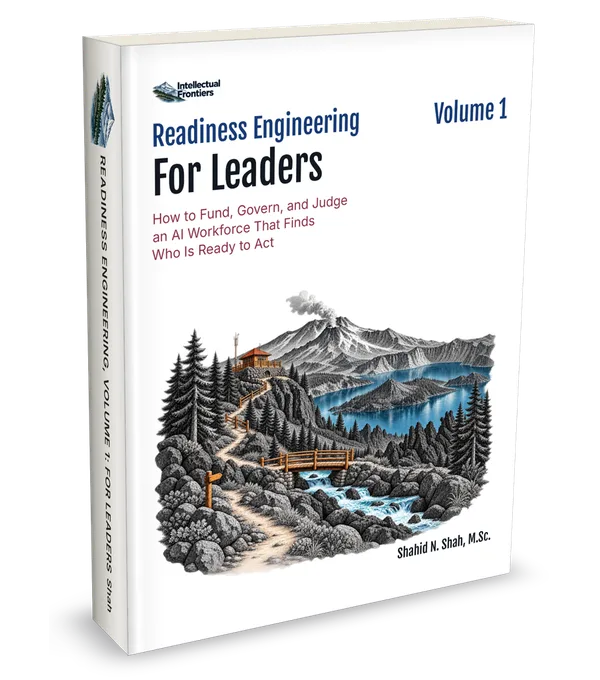
How to Fund, Govern, and Judge an AI Workforce That Finds Who Is Ready to Act
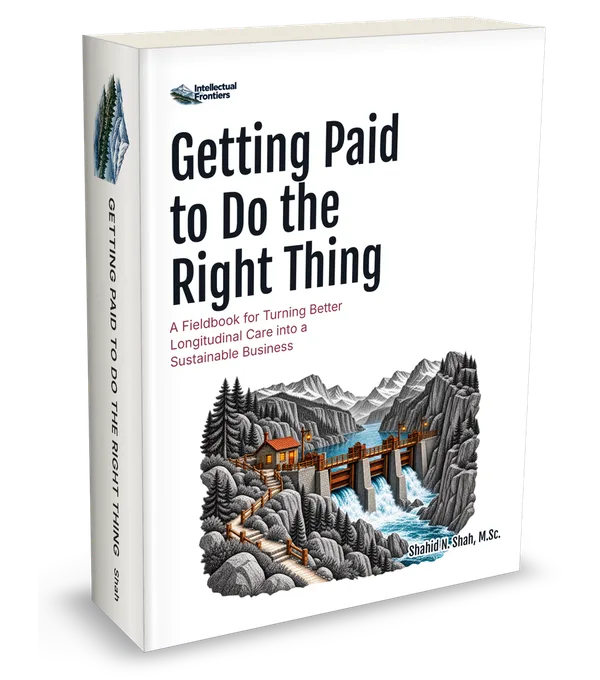
A Fieldbook for Turning Better Longitudinal Care into a Sustainable Business
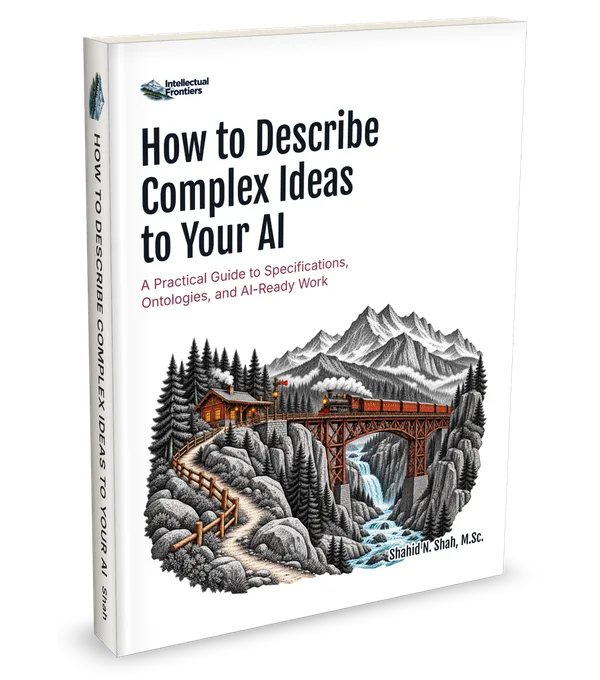
A Practical Guide to Specifications, Ontologies, and AI-Ready Work
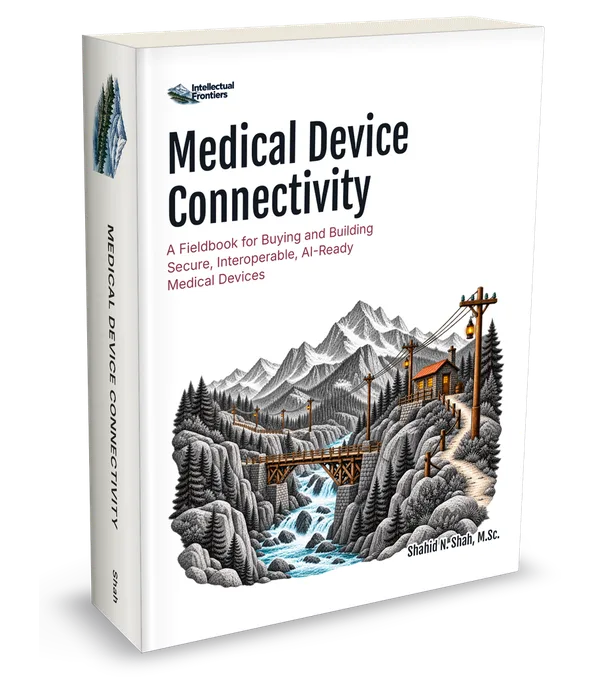
A Fieldbook for Buying and Building Secure, Interoperable, AI-Ready Medical Devices
Eidolon, Ergon, and Noema: Why AI Needs to Understand What Exists, What We Build, and What We Think
Operating an AI Workforce That Finds Who Is Ready to Act, from Its First Scheduled Job to Run
How PIs Can Prepare for NIH Review
A Fieldbook for Building Coherent Schools Around Children
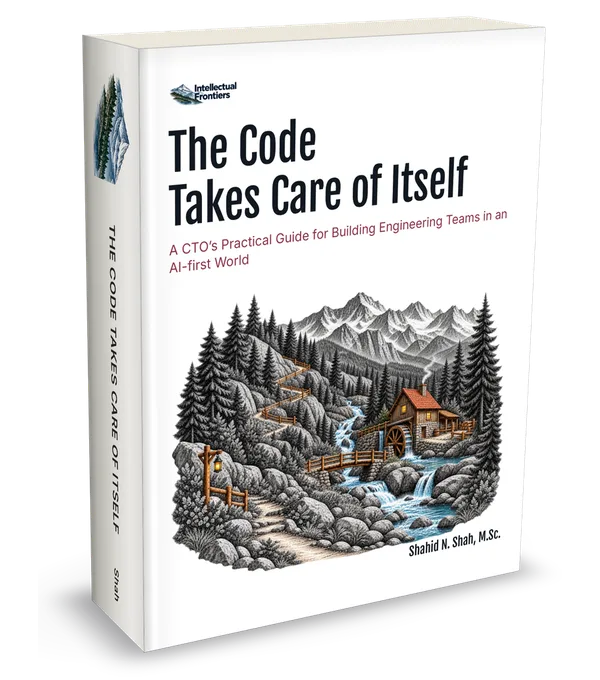
A CTO’s Practical Guide for Building Engineering Teams in an AI-first World
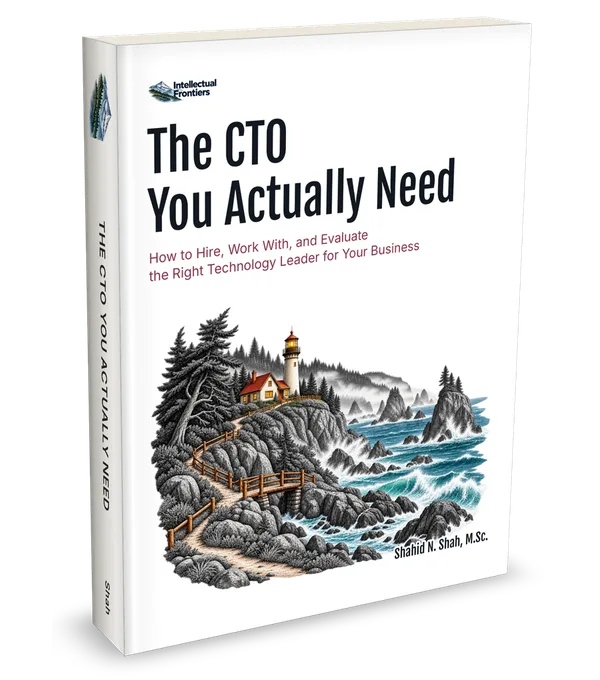
How to Hire, Work With, and Evaluate the Right Technology Leader for Your Business
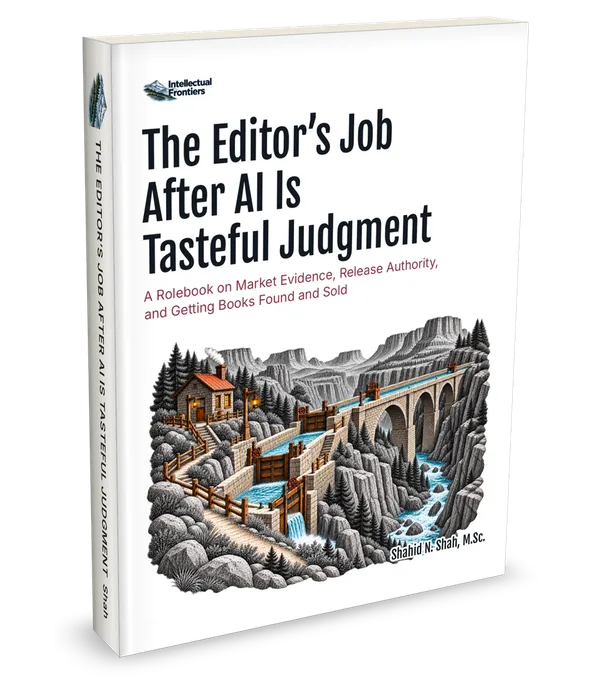
A Rolebook on Market Evidence, Release Authority, and Getting Books Found and Sold

How to Build AI-Native Systems That Find the Right Customers, Investors, Partners, Acquirers, Talent, and Funders at the Right Time
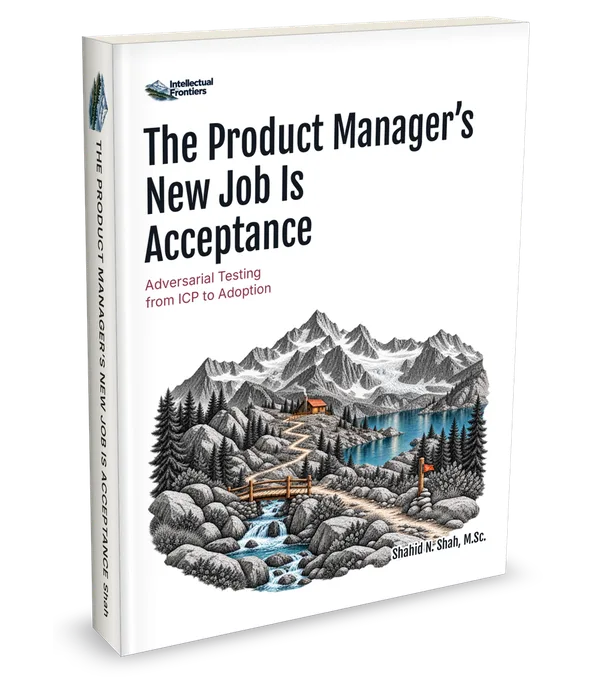
Adversarial Testing from ICP to Adoption

How B2B Software Lost Touch With the People Who Do the Work, and How AI Gives Us a Chance to Fix It

Why the People Who Fight Should Build What They Fight With, and How AI Makes It Possible
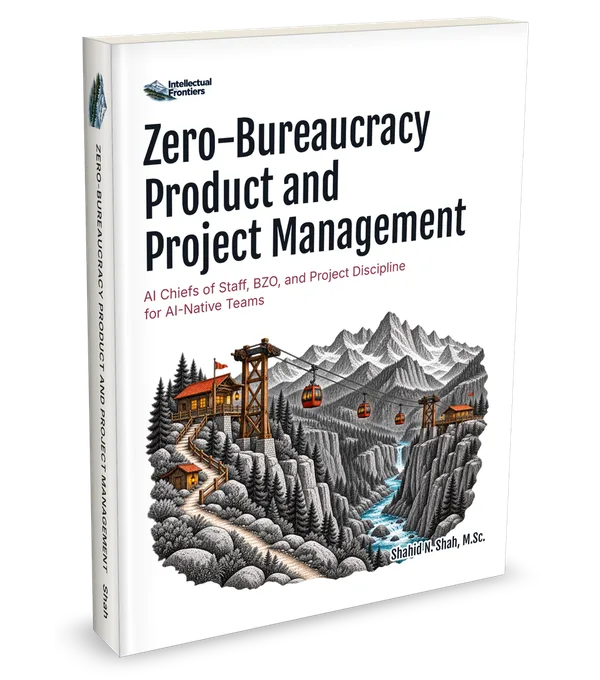
AI Chiefs of Staff, BZO, and Project Discipline for AI-Native Teams
Open skills to hand to your own AI or follow by hand, and the software and services anyone can use to build consequential solutions.
Skill
When a practice wants to cut what a Medicare between-visit program costs to run without cutting care, decide what to automate first, find out whether it really needs another coordinator or nurse, or stop a monitoring or alert stream from…
Skill
When the user wants to decide which tasks or capabilities their team should automate with AI, which need human review or decision rights, and which AI is quietly eroding versus strengthening as a real advantage.
Skill
When the user wants to execute or rehearse a Bare Metal Software Day 2 operational procedure against their own system - restoring from backup, rotating a secret, shipping a hotfix, onboarding or offboarding a customer, handling a vulnerable…
Skill
When the user wants to audit or design their application's security posture using Bare Metal Software's "four attackers" model and crown-jewels framework, including mapping defaults to a regulated buyer's security questionnaire.
Skill
When the user wants to set up an AI Chief of Staff for a software project - a persistent reasoning layer that watches a repository's specifications, decisions, issues, tests, and meetings, and reconciles them, without becoming the project's…
Skill
When a technology leader wants to build a real, living engineering playbook — starting with version control, code review, and CI/CD — instead of a rulebook nobody reads, or wants to audit an existing set of engineering processes and set up…

Published Research in The Journal of Intellectual Frontiers
Position
A working digital reflection of a person, company, customer, product, or system: a likeness with enough grounded evidence for an AI to reason about the real thing accurately and flexibly.
Position
IPLG: the framework for turning a unit's research, frameworks, and expertise into something a visitor can use directly, and Press's own discipline for how an intellectual product gets promoted, sold, and diffused without becoming marketing.
Position
AI makes specialist knowledge cheap, so the people and firms that win from here are the ones who can see a whole system, close its loops and prove what it does.
Working paper
This paper argues that AI-prepared dashboards and digests add information faster than people can act on it, and proposes a Decisions & NBA Board: a short queue of decisions, each with cited evidence, options, an owner with authority and a dated check on the result. It matters because a report that changes no decision is a cost. No hypothesis has been tested.
Working paper
This paper proposes a field-testable operating model for CTOs: one traceable evidence base that executive peers can inspect for their own jobs without relying on the CTO's persuasion. It matters because senior leaders often judge engineering by remembered incidents and impressions. The six hypotheses have not been tested.
Working paper
This paper proposes Olive Button, a Blue Button-style FHIR implementation pattern for DD214 service data that helps meet the 30-, 120-, and 180-day mandates of Executive Order 14426 using existing systems and standards. It matters because the order now requires records sharing at separation. The FHIR mapping is an implementation hypothesis, and the order does not mandate FHIR.
Journal of Diabetes Science and Technology
An editorial arguing that biotech commercialization should be run the way engineering is run, with specifications, measurement, and repeatable process, rather than treated as a series of one-off translational events. The
Journal of Translational Medicine
Patients, clinicians, administrators, regulators, and AI developers each need a reason to trust medical AI, and diabetes shows what that takes. Trust requires moving beyond single deterministic outputs to clear standards
Journal of Diabetes Science and Technology
This article argues that sharing research code in an open access, version-controlled repository benefits science and individual researchers, and aligns with the NIH Gold Standard Science program and the FAIR and TRUST pr
58 patents in 30 families, offered for licence or acquisition.
Healthcare delivery
Healthcare delivery
Marketplaces and payments
Evidence and decisions
Healthcare delivery
Learning and content
Venture
A reference lab for biomarkers captured passively from ordinary sensors: voice, gait, respiration, facial expression, wearable and metabolic signals, standardized into panels, reported like any other lab result, and governed by an integrated review board and clinician network.
Fund
Back the clinicians rebuilding care delivery. An intelligence engine built on CMS and claims data decides whether the firm invests in a founder already in motion, takes selective control of an operator worth re-platforming, or builds the company itself.
Venture
An operating system for supervising an accountable digital care operation. A clinical leader reviews decisions, evidence, and billing as a queue of work with owners and dates, instead of hunting through a dashboard for whatever went wrong.
Venture
Verified practitioner consults delivered online, with a real operating stack behind the booking screen: intake, a longitudinal care record, agents that carry the routine work, a clinician copilot, and the compliance apparatus a regulated consult requires.
Venture
An HSA card that pays patients a data dividend for consented, de-identified health data. No surveys, no tracking: the value exchange rides on the card transaction itself. The privacy architecture (HIPAA Expert Determination de-identification, transparent revocable consent, IRB oversight for research partnerships) is the work, not the marketing.
Fund
A small, working fund that incubates the foundational ventures and shared services the rest of the portfolio will run on: demand intelligence, revenue operations, an execution layer for providers, and ambient measurement.