
Intellectual Frontiers Rolebooks
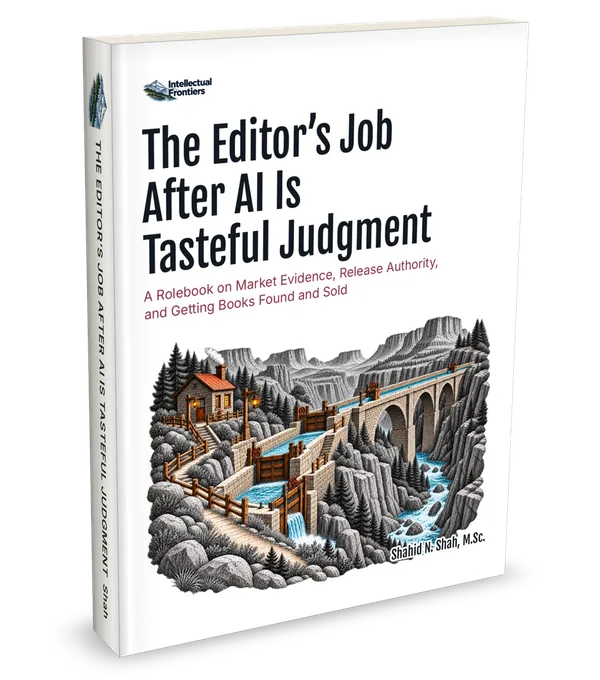
The Editor’s Job After AI Is Tasteful Judgment
A Rolebook on Market Evidence, Release Authority, and Getting Books Found and Sold
When AI does most of the editing labor, the editor decides what deserves to ship.
AI has made competent prose, rewrites, consistency checks, and formatting cheap. It has not made judgment cheap. Whether an idea deserves a book, whether an argument holds, whether the evidence is enough, and when to stop editing and release are still decisions a person has to make and own.
Forthcoming. The book is in review.
When AI can do most of the editing, the editor’s job is deciding what deserves to ship.
This Rolebook is for experienced nonfiction editors whose job is changing. It says which parts of the old job are going away, which parts matter more than ever, and what an editor should do differently on Monday morning. It describes one hypothesis that Intellectual Frontiers Press is testing on itself, that one excellent editor working in a GitHub, AsciiDoc, and Claude Code publishing system can oversee a small imprint.
It also treats discovery as part of the job, since a book has to be found before it can be sold, and an editor who understands digital distribution is worth more to a publisher than one who does not. It does not claim the hypothesis is proven, and it says what evidence would show it is wrong.
What you will be able to do
- Sort your current work into what needs your judgment and what a machine can do
- Decide when a book is sellable and ship it
- Treat categories, descriptions, and keywords as editorial work, and put them on a Metadata Brief
- Test an edit against evidence before it delays a release
- Write your editorial standards as a spec your AI Workforce can follow
- Keep a manuscript as versioned source you can inspect, diff, and preview
- Run Claude Code through one review loop and check every change it makes
- Move from working on one manuscript to running a catalog
- Measure whether the model is working, and know when it is not