
US10489830B2: Aggregation Of Rating Indicators
In plain language
Optimizing Rating Aggregation - A Method for Creating Accurate Aggregate Rating Indicators
Optimize your decision-making with accurate aggregate ratings. See how our methods improve reliability in rating aggregation, with a focus on sentiment analysis
Drawings
15 sheets as filed; open one to see it at full size. A figure drawn across its sheet is turned to read upright.
What the drawings show
- In the drawings, like numerals describe similar components substantially throughout the several views. The drawings illustrate generally, by way of an example, but not by a way of limitation, various embodiments.
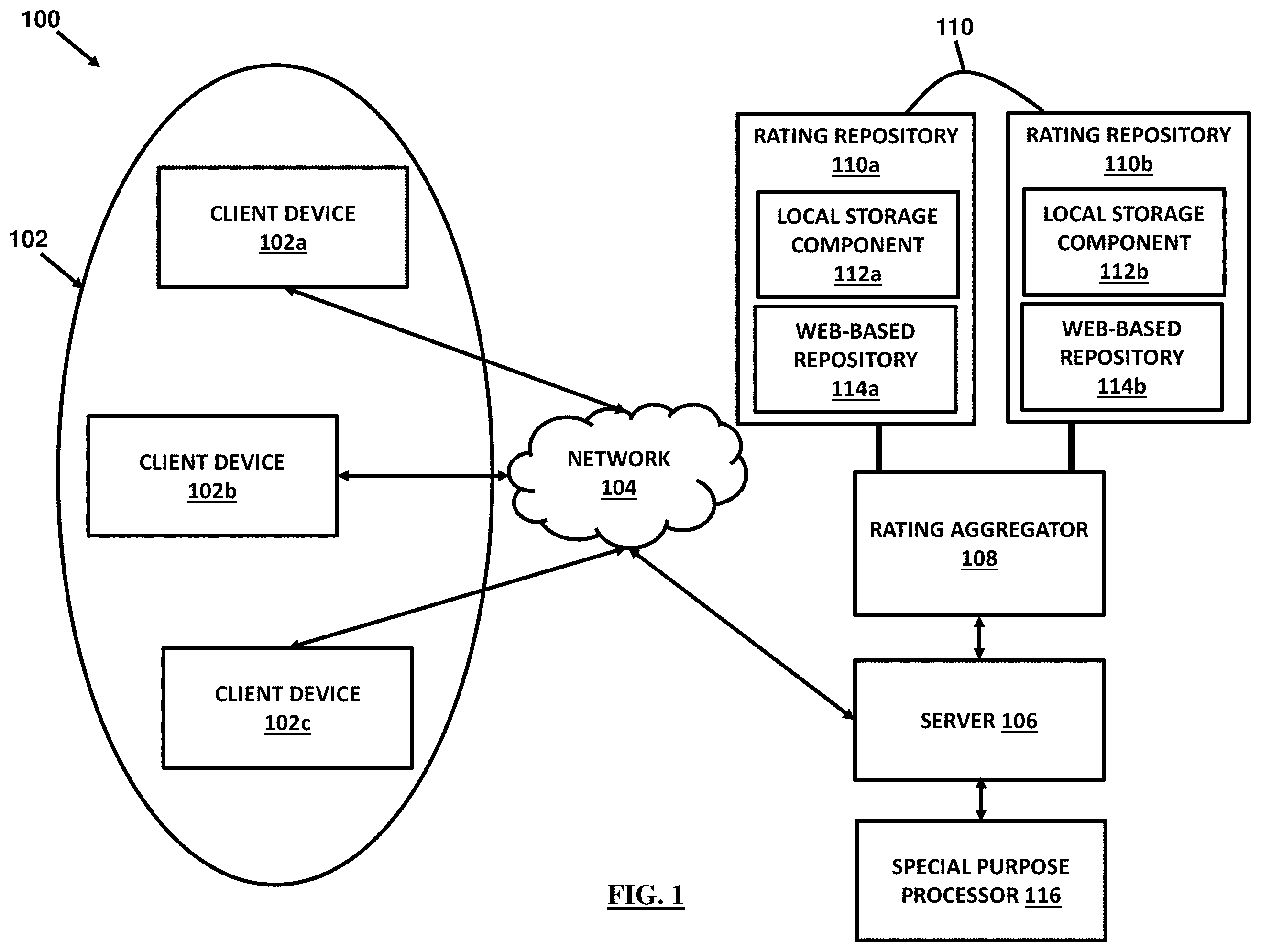
- FIG. 1 illustrates an exemplary architecture for establishing ratings in accordance with an embodiment herein;
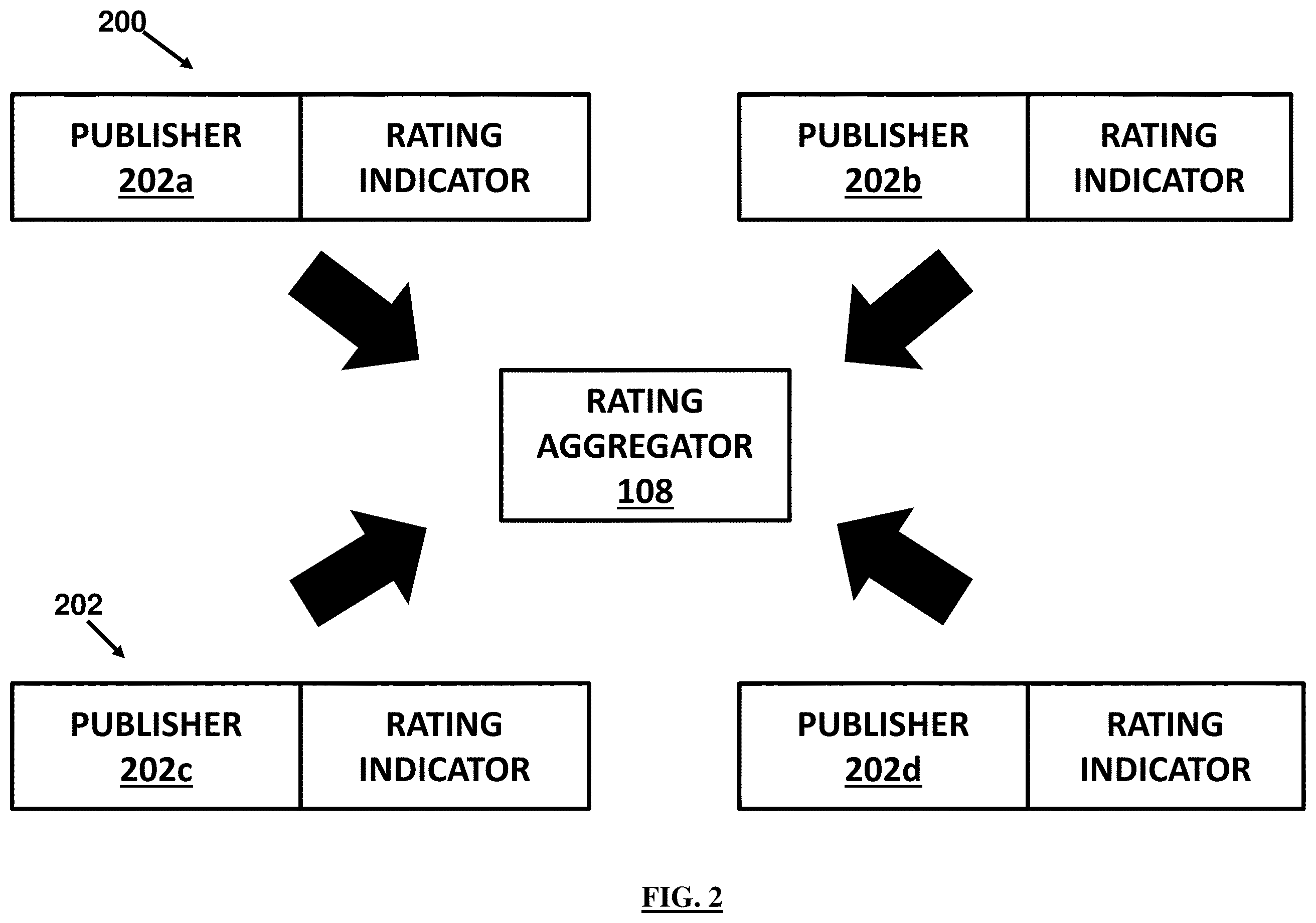
- FIG. 2 illustrates an exemplary environment depicting a process of aggregation of ratings acquired from a plurality of publishers in accordance with an embodiment herein;
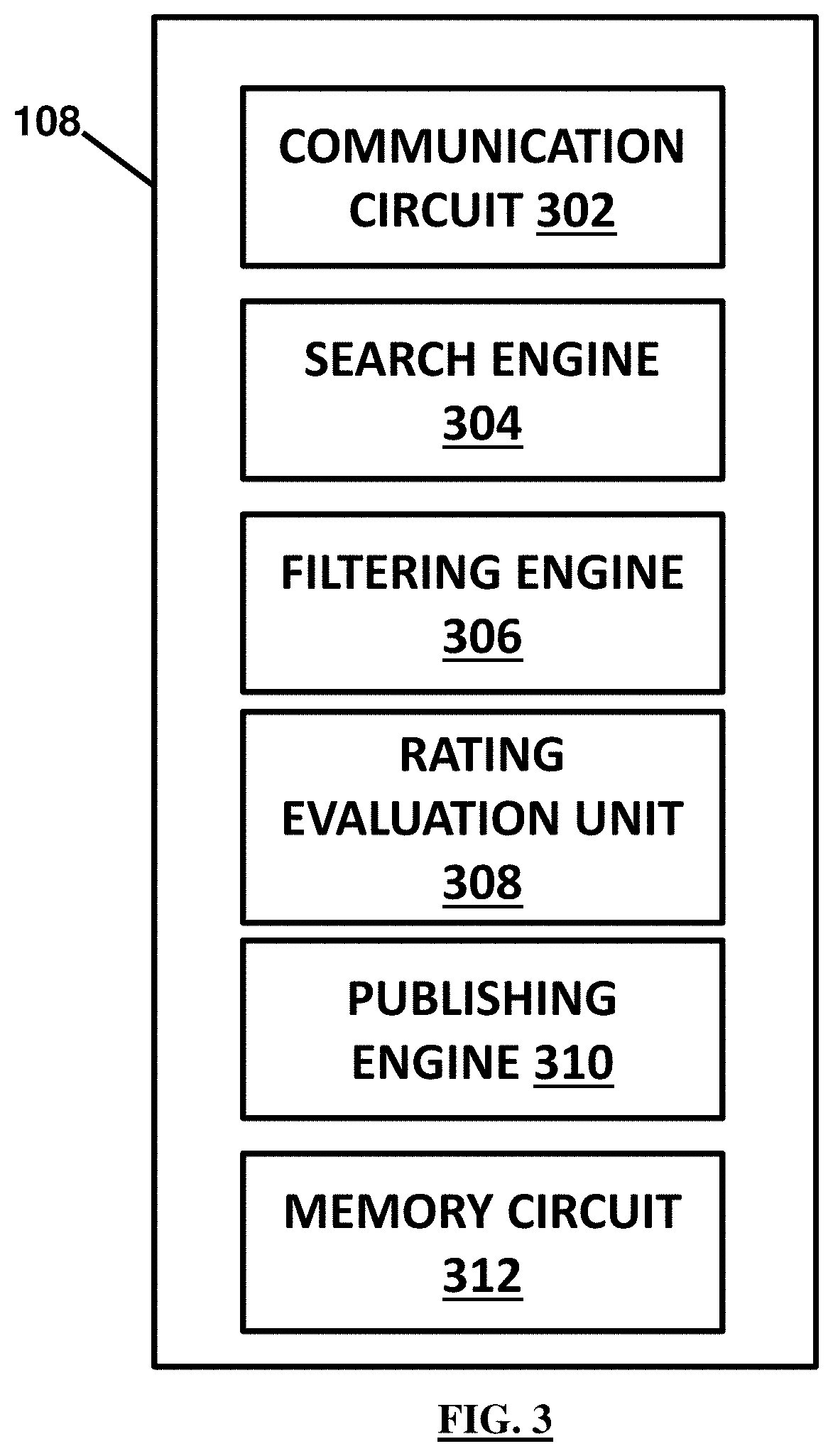
- FIG. 3 illustrates a system block diagram of the rating aggregator in accordance with an embodiment herein;
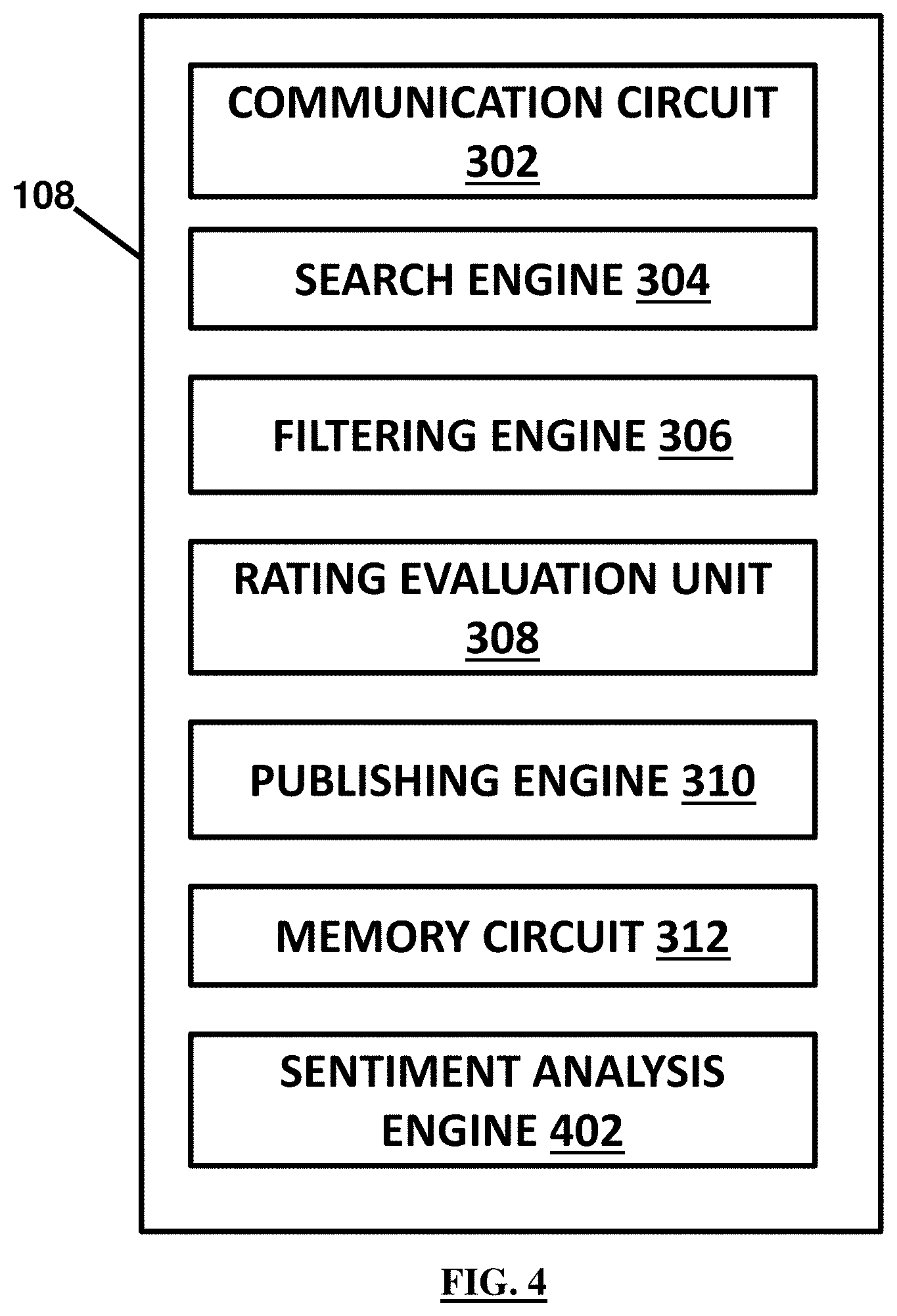
- FIG. 4 illustrates an example of a rating aggregator in accordance with another embodiment herein;
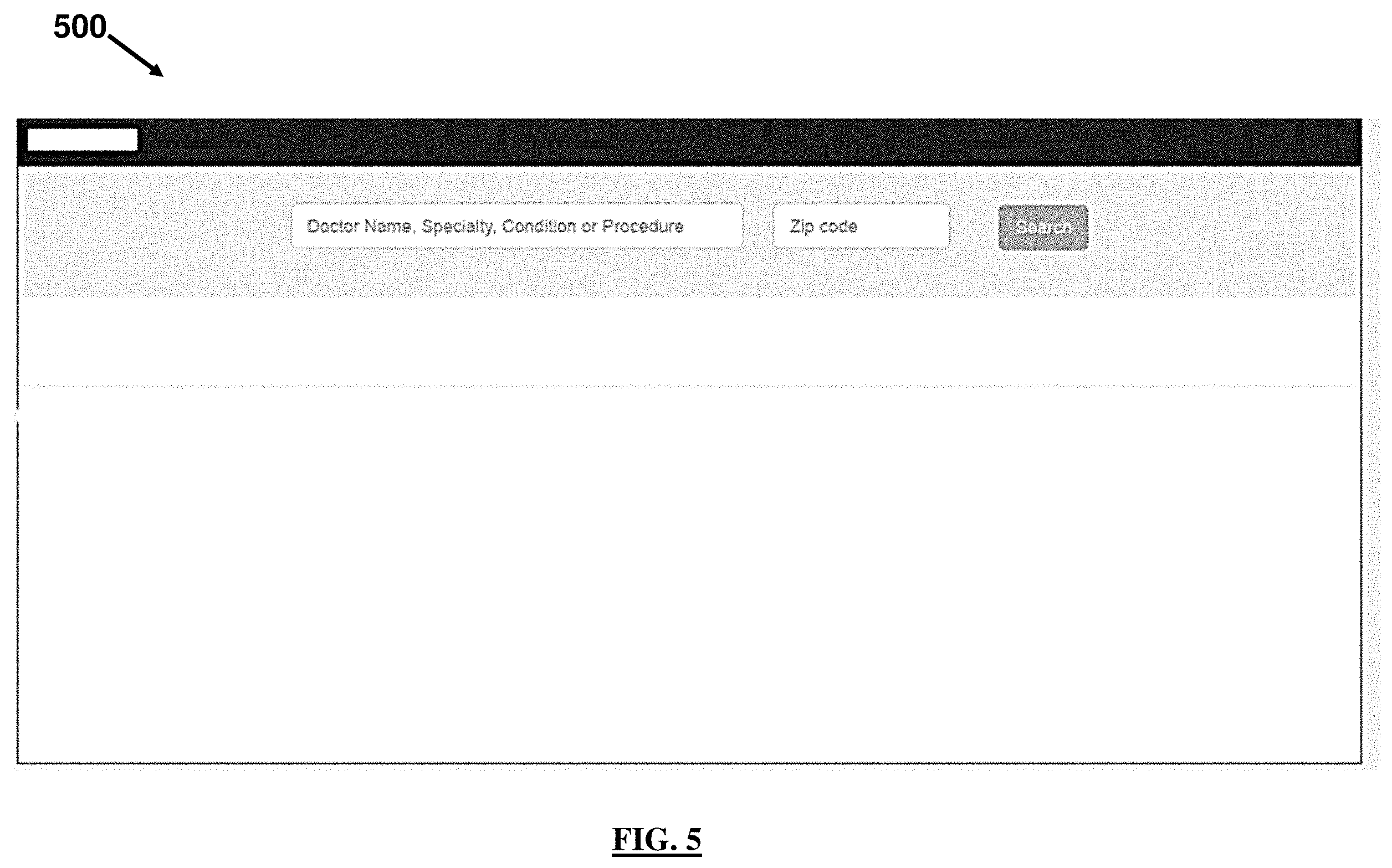
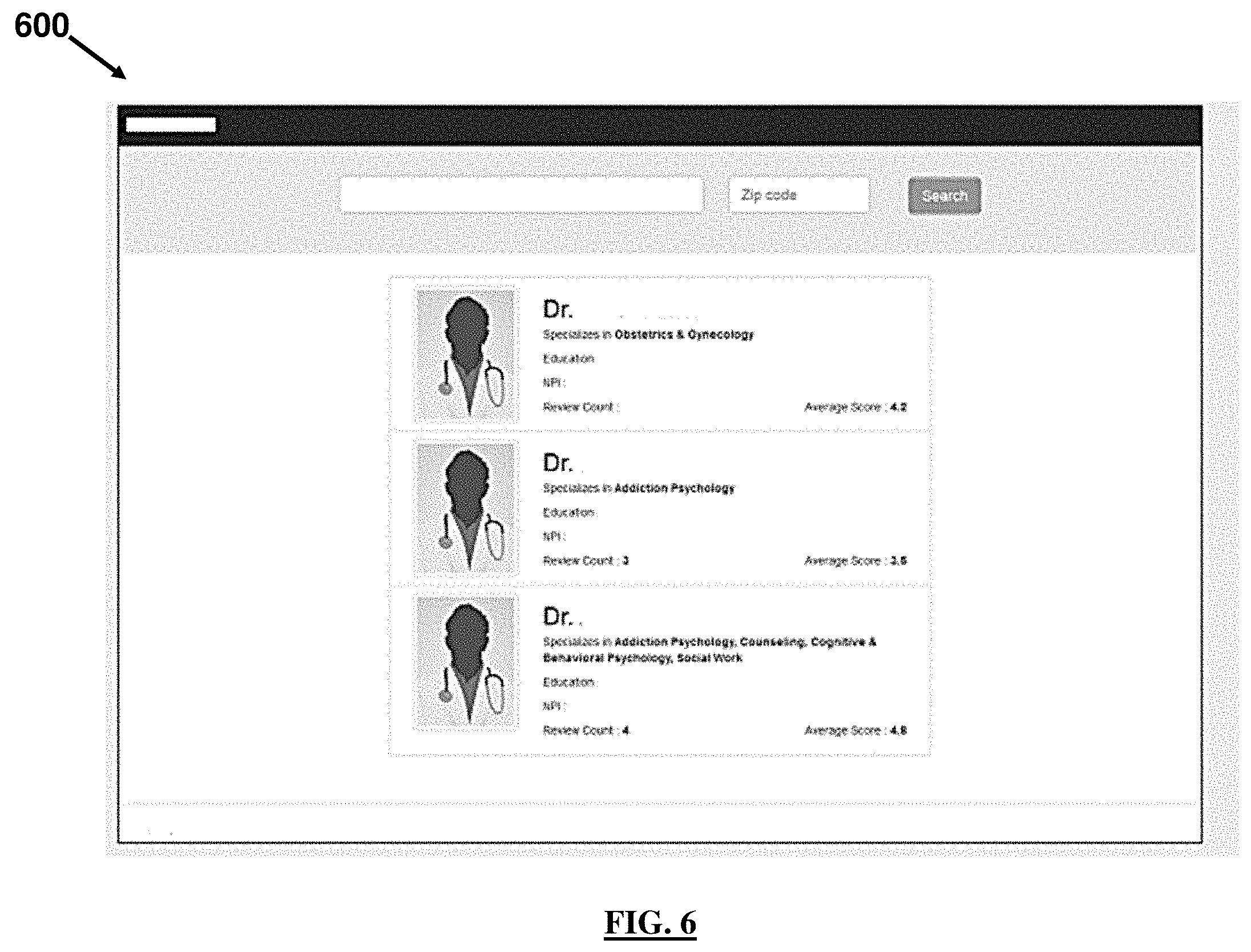
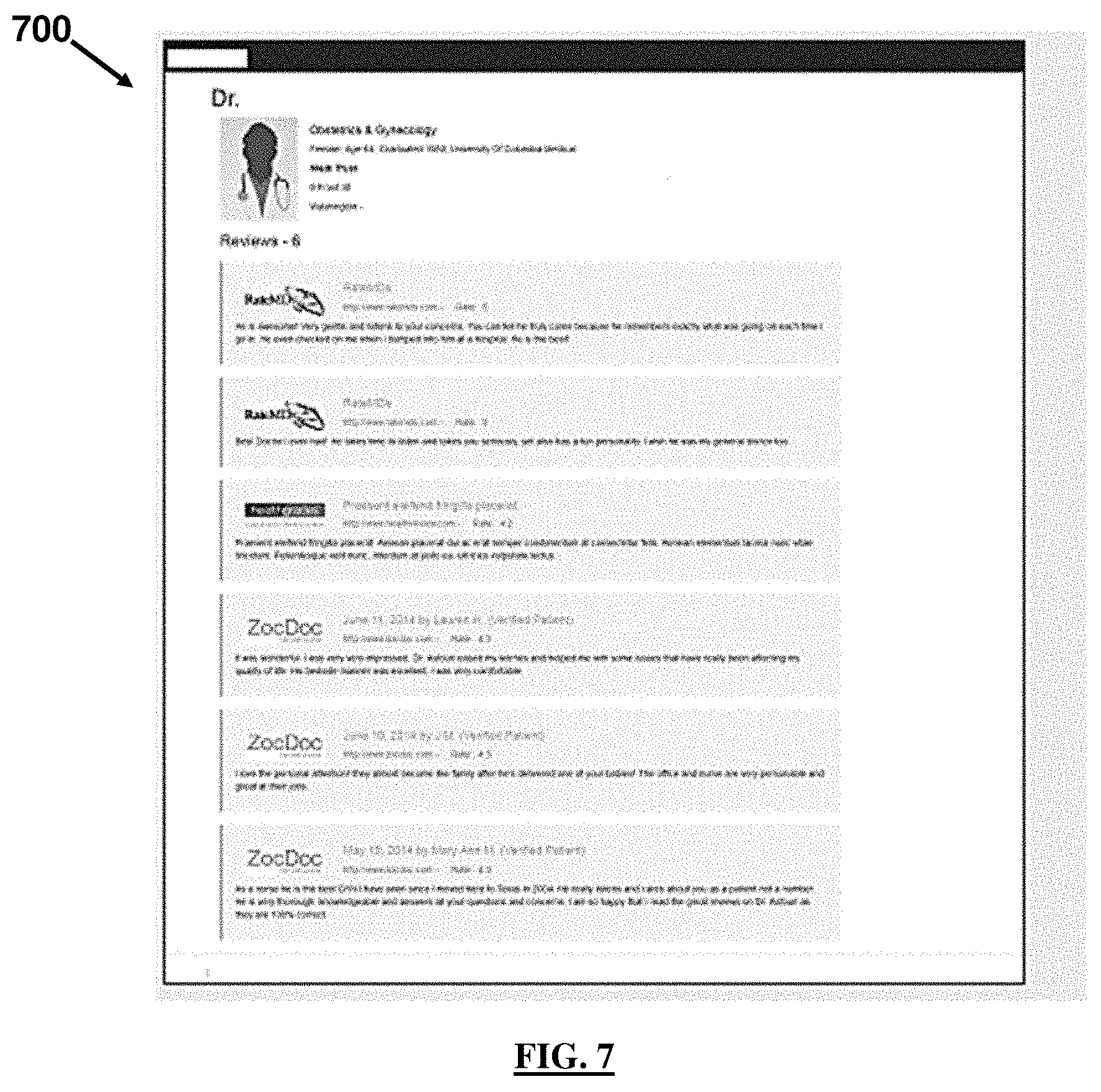
- FIGS. 5-7 illustrate examples of user interfaces for facilitating interactions with a rating aggregator in accordance with an embodiment herein;
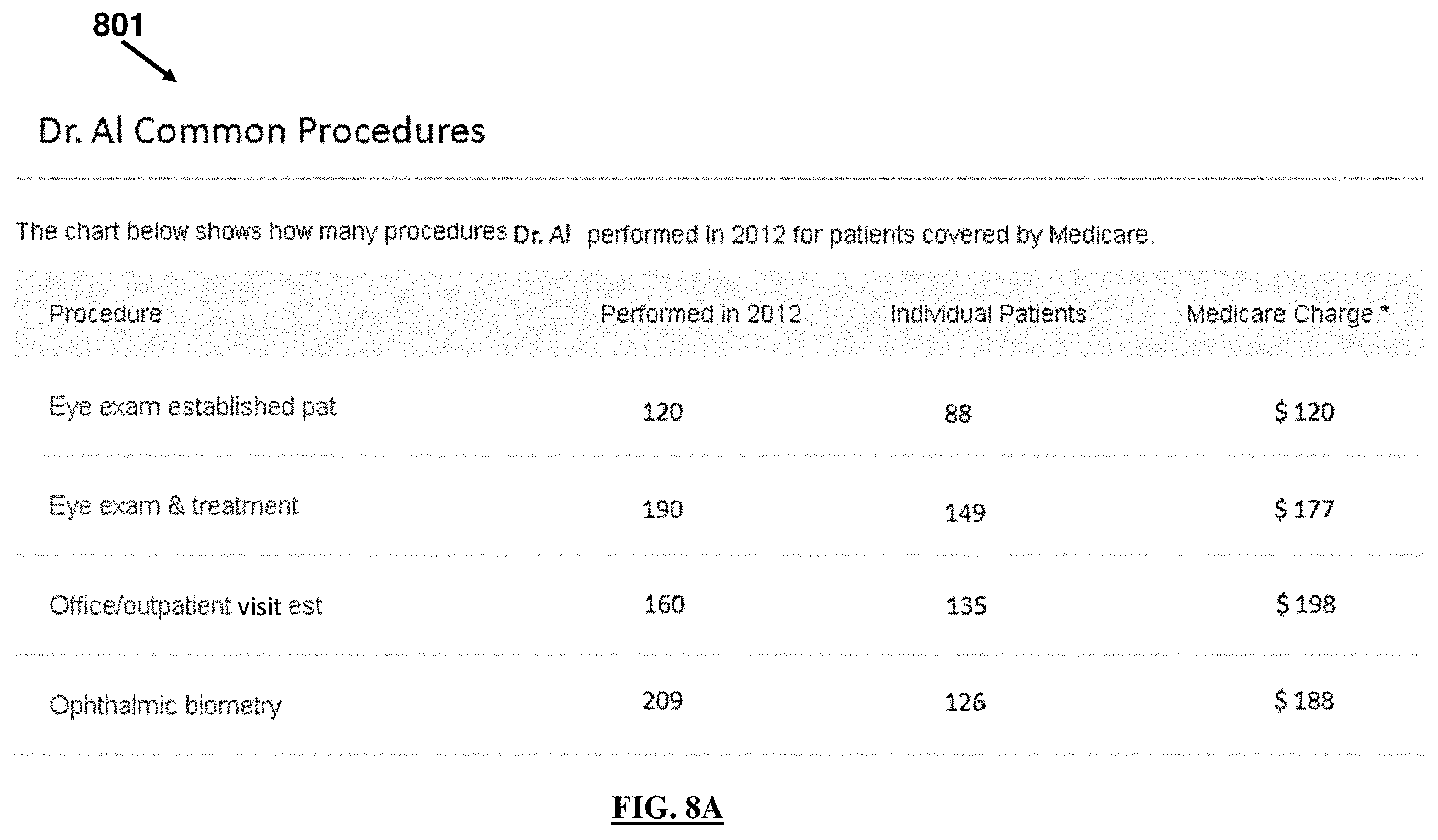
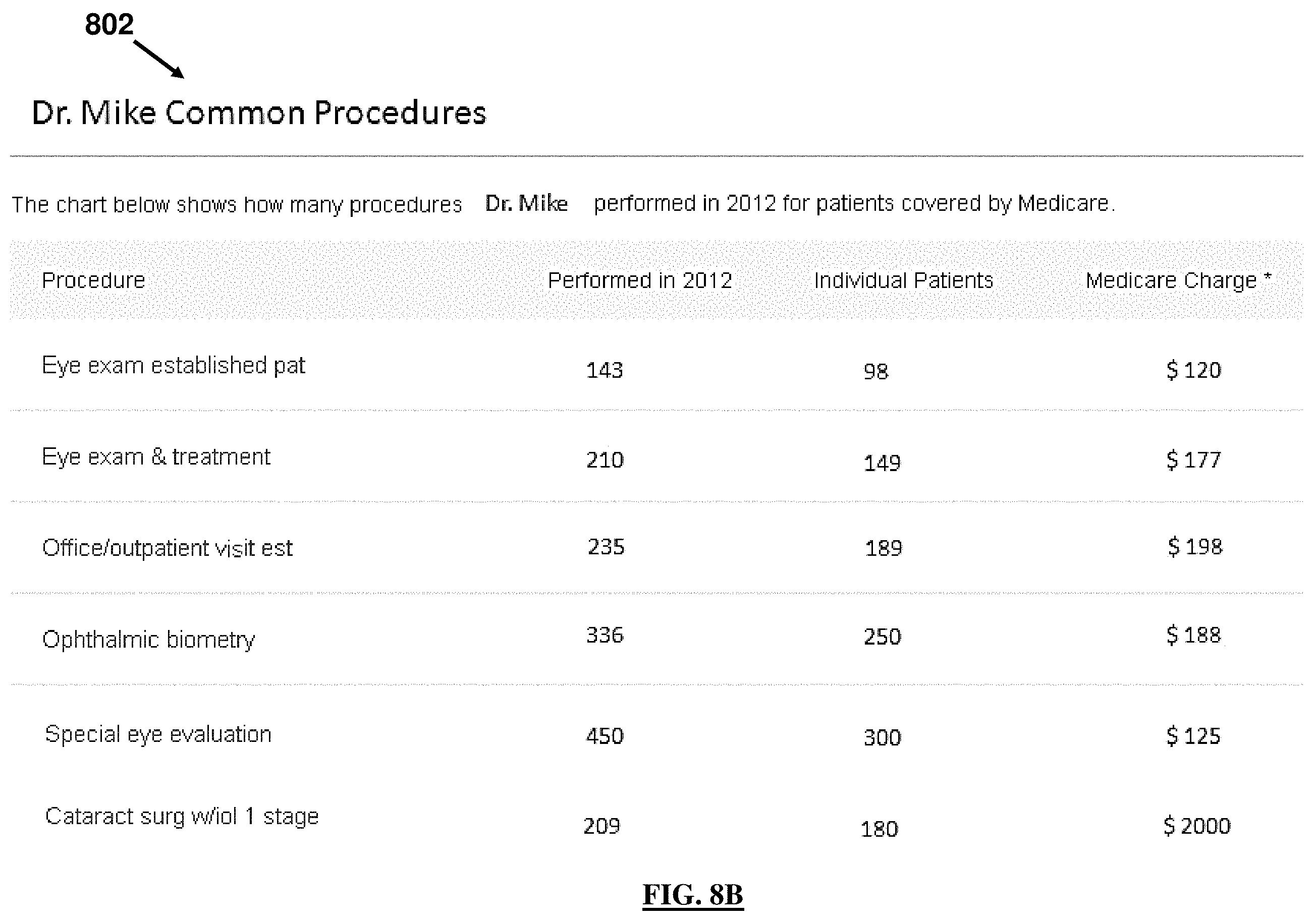
- FIGS. 8A and 8B illustrate examples of financial information and profile information retrieved by a rating aggregator for use in comparative determination of associated aggregated ratings of physicians in accordance with an embodiment herein;
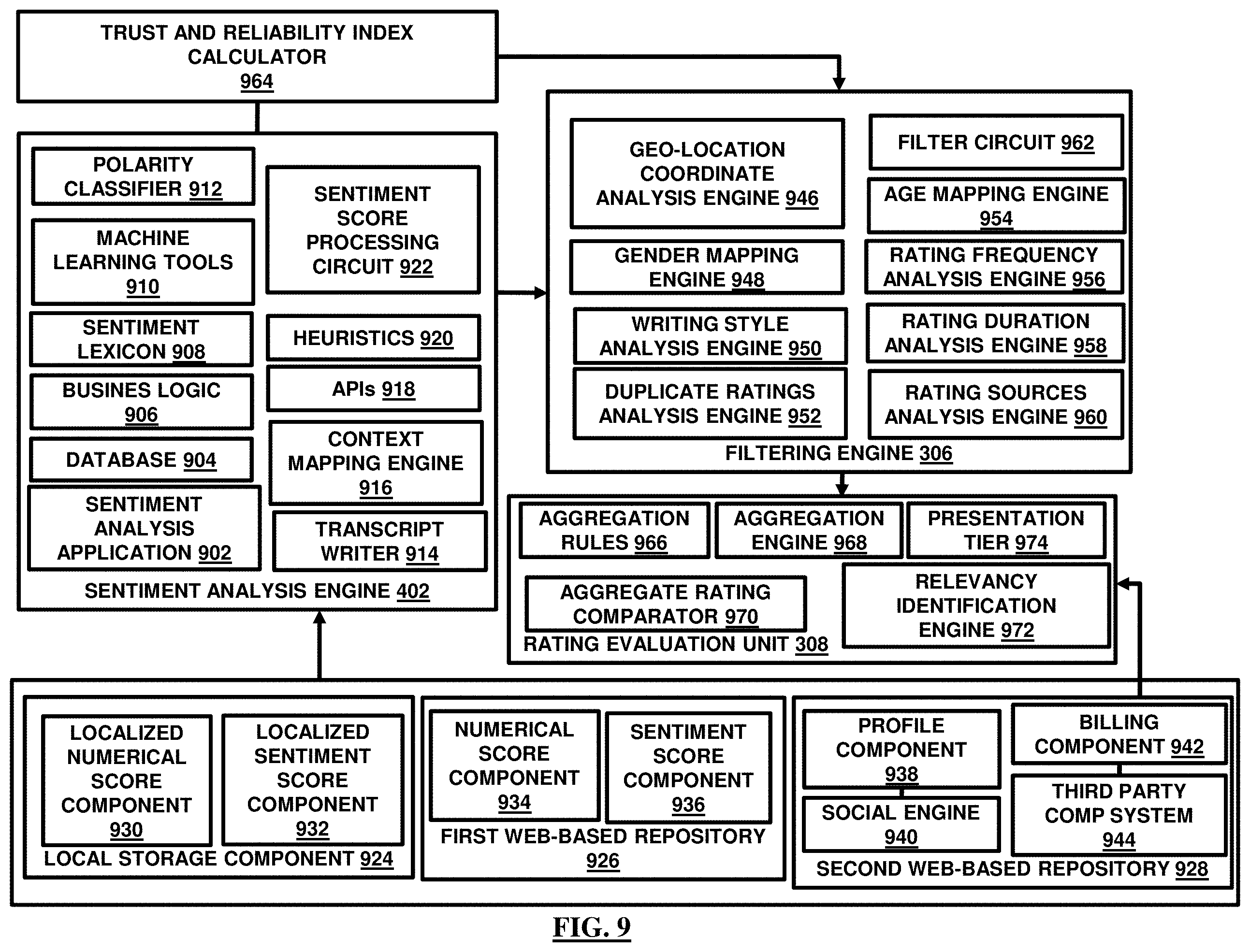
- FIG. 9 illustrates a sentiment analysis engine, a filtering engine, and a rating evaluation unit communicatively connected with a plurality of rating sources, in accordance with an embodiment herein;
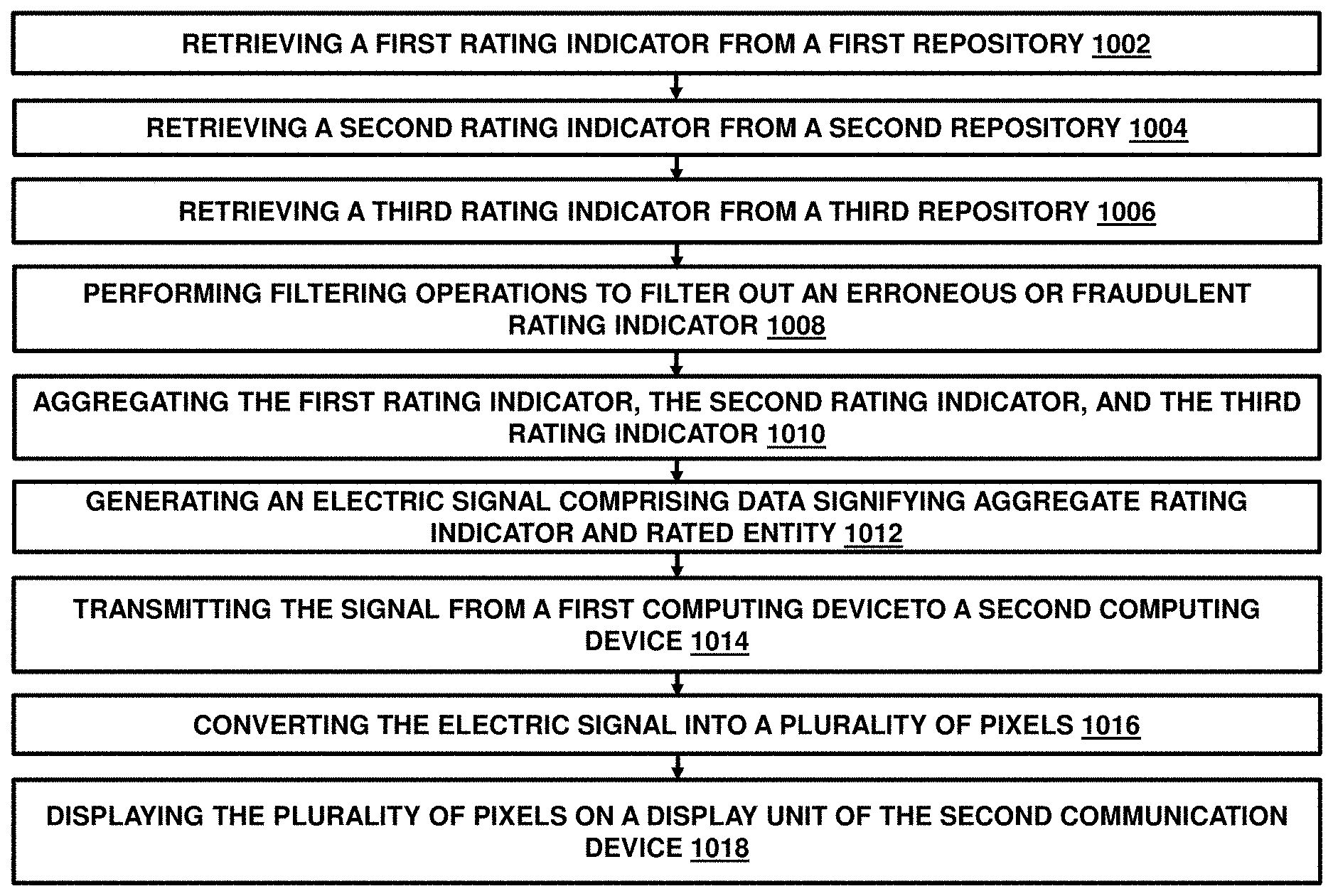
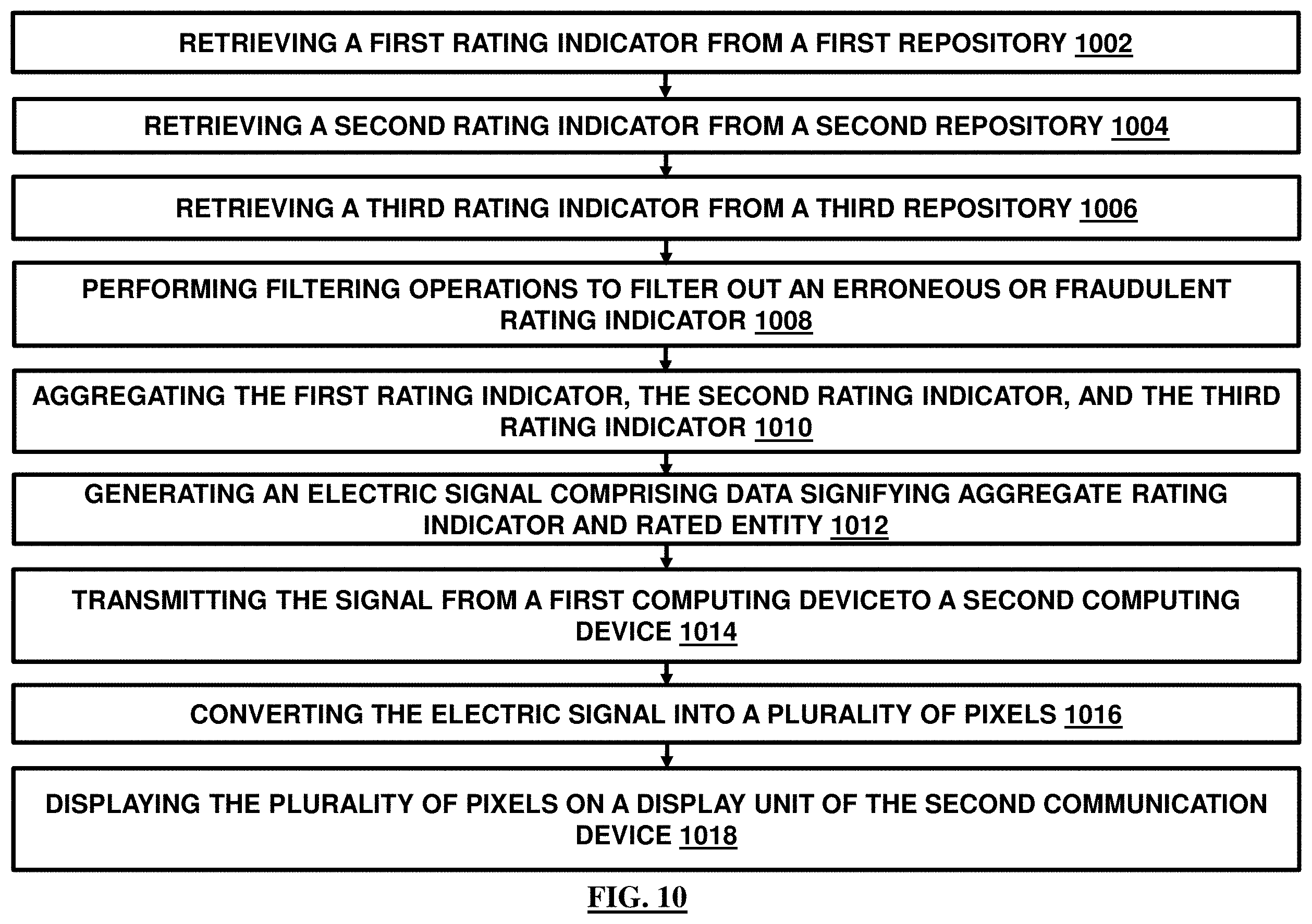
- FIG. 10 illustrates a method diagram for aggregation of rating indicators and publishing of an aggregate rating indicator, in accordance with an embodiment herein;
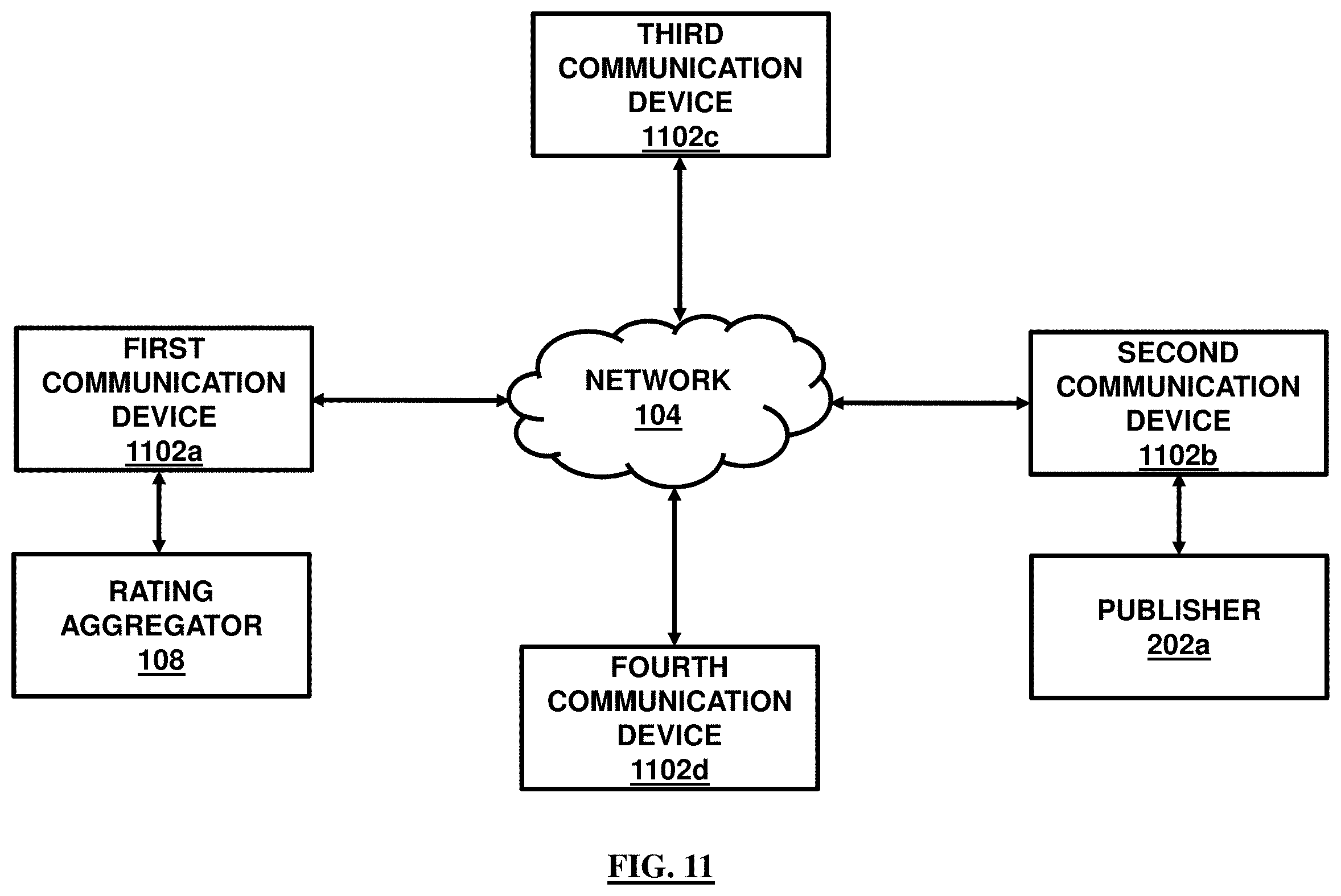
- FIG. 11 illustrates an exemplary architecture involving a plurality of computing devices connected over the network, in accordance with an embodiment herein;
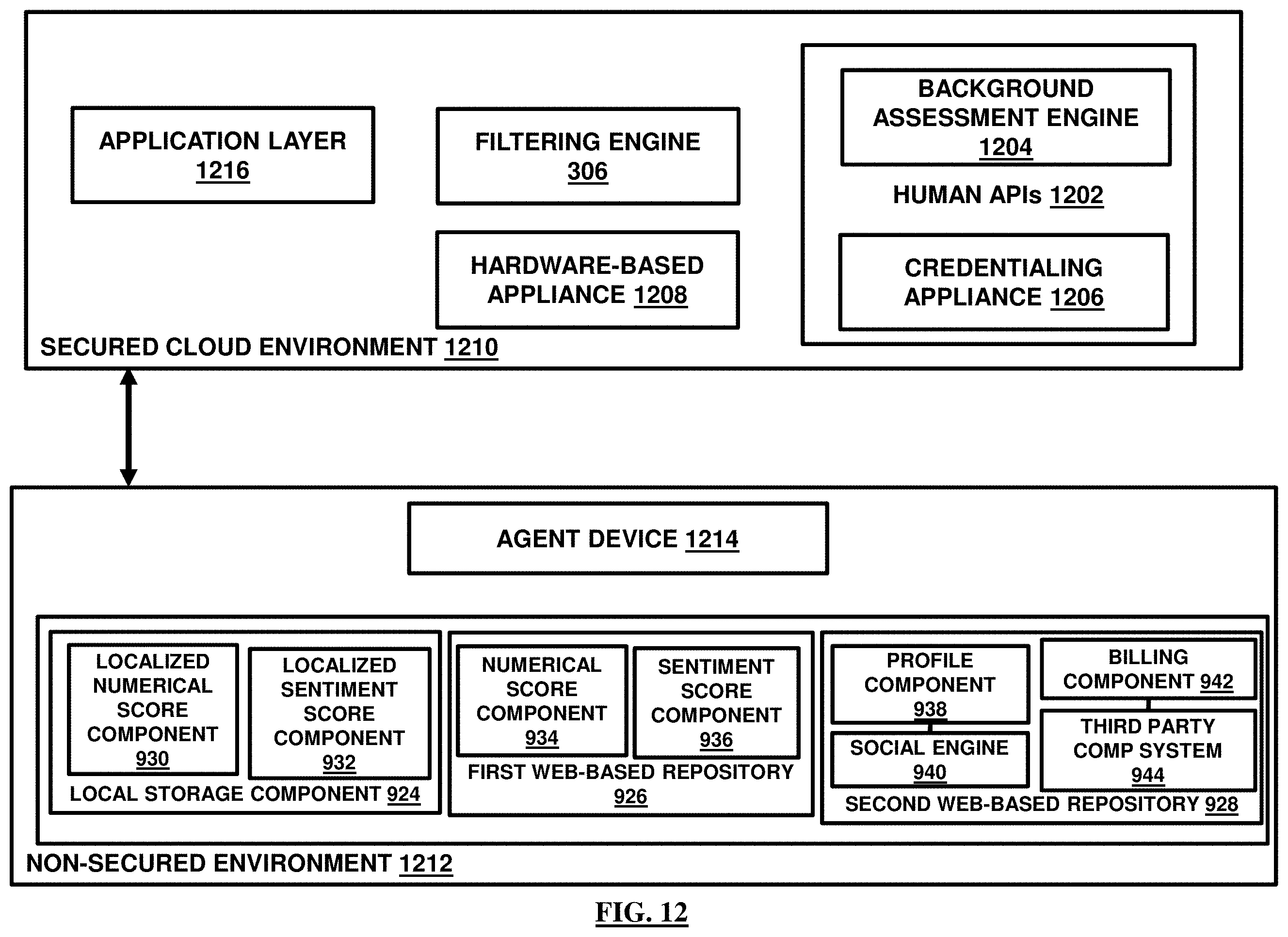
- FIG. 12 illustrates an example of filtering of the rating indicators that are obtained from various types of sources through use of a multi-layer filtering approach, in accordance with an embodiment herein; and
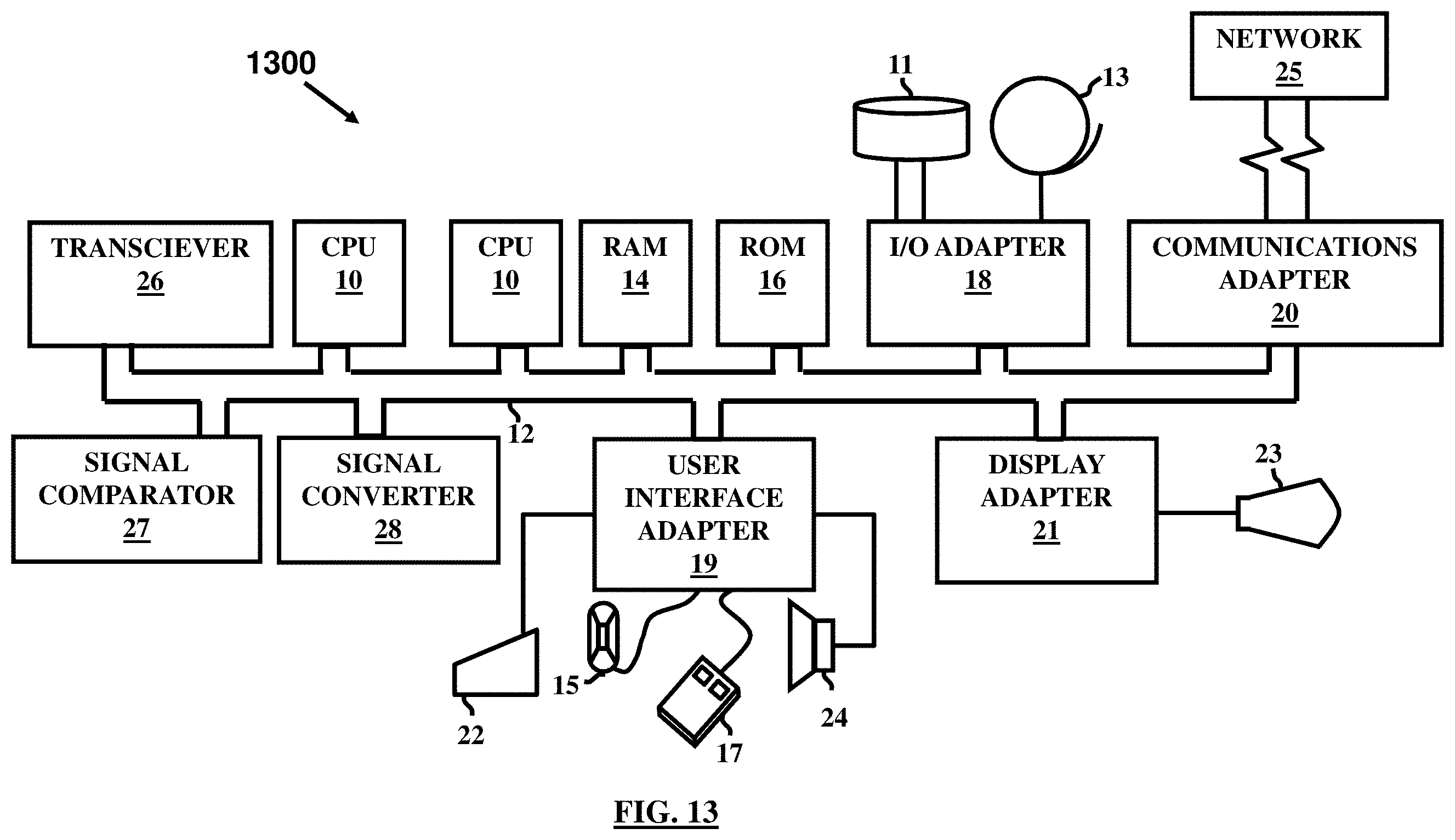
- FIG. 13 illustrates a computer system that may be used in accordance with the embodiments herein.
Abstract
A computer-implemented method and system for publishing an aggregate rating indicator based on a plurality of discrete rating indicators associated with a rated entity. The method includes searching a plurality of repositories containing the plurality of discrete rating indicators associated with the rated entity. The method may include retrieving a first rating indicator, a second rating indicator, and a third rating indicator. At least one of the first rating indicator, the second rating indicator, and the third rating indicator may be a fraudulent rating indicator. The method may include filtering out the fraudulent rating indicator from among the first, second, and third rating indicators, wherein the fraudulent rating indicator is determined based on a combination of parameters. The method may include aggregating the first, second, and third rating indicators after filtering out the fraudulent rating indicator such that the aggregation results in an aggregate rating indicator.
The problem it addresses
Technical Field
The embodiments herein generally relate to data compilation, and more particularly to methods and systems for aggregating ratings data.
Description of the Related Art
Different review platforms often provide different ratings and reviews which may be substantially different based on who is providing the review and based on reliability and authenticity associated with reviewers and reviews. Such platforms leverage the wisdom of a crowd for assessing different entities such as physicians etc. Rating aggregation algorithms exist which typically collate different ratings from such as websites and generate a summation or an average rating for an entity which is indicative of credibility of the entity such as a physician.
The rest of the background
Existing methods and systems however do not generally provide an optimal aggregate score since the ratings may be influenced due to variances in reviewers' approach of rating an entity and because all reviews or reviewers may not be reliable in the same way.
In view of the above, there is a need to provide an improved way and system for generating an aggregate rating indicator about an entity to establish an optimal rating and to facilitate searching of entities in an optimal way based on rating indicators to meet user requirements in a precise manner.
Summary of the invention
An embodiment herein provides a computer-implemented method for publishing an aggregate rating indicator based on a plurality of discrete rating indicators associated with a rated entity. The method includes searching a plurality of repositories containing the plurality of discrete rating indicators associated with the rated entity, wherein each of the plurality of rating indicators comprises a numerical score component and a sentiment score component. The method may include retrieving a first rating indicator published on a web-based repository. The first rating indicator may include a first numerical score component and a first semantic score component. The method may include retrieving a second rating indicator published on a personalized social networking platform section. The second rating indicator may include a second numeric score component and a second semantic score component. The method may include retrieving a third rating indicator stored with a local storage component associated with the rated entity or a rating entity. The third rating indicator may include a third numeric score component and a third semantic score component. At least one of the first rating indicator, the second rating indicator, and the third rating indicator may be a fraudulent rating indicator. The method may include storing the first rating indicator, the second rating indicator, and the third rating indicator in a memory circuit equipped with a special purpose processor. The method may include filtering out the fraudulent rating indicator from among the first rating indicator, the second rating indicator, and the third rating indicator, by the special purpose processor, wherein the fraudulent rating indicator is determined by the special purpose processor based on a combination of parameters including a geo-location coordinate similarity between a rating entity and the rated entity, gender identification, age specifics, frequency of the rating indicator of the rated entity by the rating entity, sentiment writing style, duration between the rating indicator and a subsequent rating indicator by the same rating entity for the same rated entity, duplicate rating indicators provided by the rating entity for the rated entity, use of multiple different rating sources for rating the rated entity by the rating entity, and the like. The method may include aggregating the first rating indicator, the second rating indicator, and the third rating indicator by the special purpose computer after filtering out the fraudulent rating indicator such that the aggregation results in an aggregate rating indicator indicative of an equivalent of the plurality of discrete rating indicators other than the fraudulent rating indicator. The method may include generating an electric signal comprising data signifying the aggregate rating indicator and the rated entity. The method may include transmitting the electric signal from a data communication device, communicatively connected with the special purpose processor, in a network comprising a plurality of communicatively linked data communication devices. The method may include converting the electric signal into a plurality of pixels. The method may include displaying the plurality of pixels on a display unit of a second communication device to publish the aggregate rating indicator associated with the rated entity and the data signifying the rated entity.
An embodiment herein provides a system for publishing an aggregate rating indicator based on a plurality of discrete rating indicators associated with a rated entity. The system may include a search engine for searching a plurality of repositories containing the plurality of discrete rating indicators associated with the entity, wherein each of the plurality of rating indicators comprises a numerical score component and a sentiment score component. The system may include a special purpose processor for retrieving a first rating indicator published on a web-based repository. The first rating indicator includes a first numerical score component and a first sentiment score component. The special purpose processor is configured to retrieve a second rating indicator published on a personalized social networking platform section. The second rating indicator includes a second numeric score component and a second sentiment score component. The special purpose processor is configured to retrieve a third rating indicator published with a local storage component associated with the rated entity or a ratting entity. The third rating indicator includes a third numeric score component and a third sentiment score component, wherein at least one of the first rating indicator, the second rating indicator, and the third rating indicator is a fraudulent rating indicator. The system includes a memory circuit communicatively and operatively connected with the special purpose processor for storing the first rating indicator, the second rating indicator, and the third rating indicator. The system includes a rating filter or a filtering engine communicatively coupled with the special purpose processor and the memory circuit for filtering out a fraudulent rating indicator. The fraudulent rating indicator is determined based on a combination of parameters including a geo-location coordinate similarity between a rating entity and the rated entity, gender identification, age specifics, frequency of the rating indicator of the rated entity by the rating entity, sentiment writing style, duration between the rating indicator and a subsequent rating indicator by the same rating entity for the same rated entity, duplicate rating indicators provided by the rating entity for the rated entity, use of multiple rating sources for rating the rated entity by the rating entity. The system may include a rating aggregator communicatively and operatively connected with the special purpose processor for aggregating the first rating indicator, the second rating indicator, and the third rating indicator after filtering out the fraudulent rating indicator such that the aggregation results in an aggregate rating indicator indicative of an equivalent of the plurality of discrete rating indicators other than the fraudulent rating indicator. The system includes an electric signal generator embedded in an electronic circuit and communicatively and operatively connected with the special purpose processor and the memory circuit for generating an electric signal comprising data signifying the aggregate rating indicator and the rated entity. The system includes a transceiver for transmitting the electric signal from a data communication device, communicatively connected with the special purpose processor and the electric signal generator, in a network comprising a plurality of communicatively linked data communication devices. The system includes a signal converter for converting the electric signal into a plurality of pixels to publish the aggregate rating indicator associated with the rated entity and the data signifying the rated entity.
Independent claims
Claim 1
A computer-implemented method for publishing an aggregate rating indicator based on a plurality of discrete rating indicators associated with a rated entity, the method comprising: searching a plurality of repositories containing the plurality of discrete rating indicators associated with the rated entity; retrieving a first rating indicator published on a web-based repository; retrieving a second rating indicator published on a personalized social networking platform section; retrieving a third rating indicator stored with a local storage component associated with the rated entity or a rating entity, wherein at least one of the first rating indicator, the second rating indicator, and the third rating indicator comprises a first fraudulent rating indicator; filtering the first fraudulent rating indicator from among the first rating indicator, the second rating indicator, and the third rating indicator, wherein the first fraudulent rating indicator is determined based on computer executable input components including a geo-location coordinate similarity between a rating entity and the rated entity, a demographic identification, a frequency of the rating indicator of the rated entity by the rating entity, a sentiment writing style, a duration between the rating indicator and a subsequent rating indicator by the same rating entity for the same rated entity, a duplication of rating indicators provided by the rating entity for the rated entity, and a use of multiple different rating sources for rating the rated entity by the rating entity; aggregating a filtered combination of the first rating indicator, the second rating indicator, and the third rating indicator to provide an aggregate rating indicator comprising an equivalent of the plurality of discrete rating indicators other than the first fraudulent rating indicator; generating an electric signal comprising data signifying the aggregate rating indicator and the rated entity; converting the electric signal into a plurality of pixels; and displaying the plurality of pixels on a display unit of a communication device.
Claim 11
A system for publishing an aggregate rating indicator based on a plurality of discrete rating indicators associated with a rated entity, the system comprising: a search engine for searching a plurality of repositories containing the plurality of discrete rating indicators associated with the entity; a processor for: retrieving a first rating indicator published on a web-based repository; retrieving a second rating indicator published on a personalized social networking platform section; and retrieving a third rating indicator published with a local storage component associated with the rated entity or a rating entity, wherein at least one of the first rating indicator, the second rating indicator, and the third rating indicator comprises a first fraudulent rating indicator; a memory operatively connected to the processor for storing the first rating indicator, the second rating indicator, and the third rating indicator; a filter communicatively coupled to the processor and the memory for filtering the first fraudulent rating indicator, wherein the first fraudulent rating indicator is determined based on computer executable input components including a geo-location coordinate similarity between a rating entity and the rated entity, a demographic identification, a frequency of the rating indicator of the rated entity by the rating entity, a sentiment writing style, a duration between the rating indicator and a subsequent rating indicator by the same rating entity for the same rated entity, a duplication of rating indicators provided by the rating entity for the rated entity, and a use of multiple different rating sources for rating the rated entity by the rating entity; a rating aggregator operatively connected to the processor for aggregating the first rating indicator, the second rating indicator, and the third rating indicator after filtering the first fraudulent rating indicator such that the aggregation results in an aggregate rating indicator indicative of an equivalent of the plurality of discrete rating indicators other than the fraudulent rating indicator; an electric signal generator operatively connected to the processor and the memory for generating an electric signal comprising data signifying the aggregate rating indicator and the rated entity; a transceiver for transmitting the electric signal; and a signal converter for converting the electric signal into a plurality of pixels to publish the aggregate rating indicator associated with the rated entity and the data signifying the rated entity.
Claim 20
A computer-implemented method for publishing an aggregate rating indicator based on a plurality of discrete rating indicators associated with a rated entity, the method comprising: searching a plurality of repositories containing the plurality of discrete rating indicators associated with the rated entity; retrieving a plurality of rating indicators published on a combination of a web-based repository and a personalized social networking platform section, wherein at least one of the plurality of rating indicators comprises a fraudulent rating indicator; filtering the fraudulent rating indicator based on computer executable input components including a geo-location coordinate similarity between a rating entity and the rated entity, a demographic identification, a frequency of the rating indicator of the rated entity by the rating entity, a sentiment writing style, a duration between the rating indicator and a subsequent rating indicator by the same rating entity for the same rated entity, a duplication of rating indicators provided by the rating entity for the rated entity, and a use of multiple different rating sources for rating the rated entity by the rating entity; aggregating a filtered combination of the plurality of rating indicators to provide an aggregate rating indicator comprising an equivalent of the plurality of discrete rating indicators other than the fraudulent rating indicator; generating an electric signal comprising data signifying the aggregate rating indicator and the rated entity; converting the electric signal into a plurality of pixels; and displaying the plurality of pixels on a display unit of a communication device.
All 20 claims
- A computer-implemented method for publishing an aggregate rating indicator based on a plurality of discrete rating indicators associated with a rated entity, the method comprising: searching a plurality of repositories containing the plurality of discrete rating indicators associated with the rated entity; retrieving a first rating indicator published on a web-based repository; retrieving a second rating indicator published on a personalized social networking platform section; retrieving a third rating indicator stored with a local storage component associated with the rated entity or a rating entity, wherein at least one of the first rating indicator, the second rating indicator, and the third rating indicator comprises a first fraudulent rating indicator; filtering the first fraudulent rating indicator from among the first rating indicator, the second rating indicator, and the third rating indicator, wherein the first fraudulent rating indicator is determined based on computer executable input components including a geo-location coordinate similarity between a rating entity and the rated entity, a demographic identification, a frequency of the rating indicator of the rated entity by the rating entity, a sentiment writing style, a duration between the rating indicator and a subsequent rating indicator by the same rating entity for the same rated entity, a duplication of rating indicators provided by the rating entity for the rated entity, and a use of multiple different rating sources for rating the rated entity by the rating entity; aggregating a filtered combination of the first rating indicator, the second rating indicator, and the third rating indicator to provide an aggregate rating indicator comprising an equivalent of the plurality of discrete rating indicators other than the first fraudulent rating indicator; generating an electric signal comprising data signifying the aggregate rating indicator and the rated entity; converting the electric signal into a plurality of pixels; and displaying the plurality of pixels on a display unit of a communication device.
- The method of claim 1 , wherein the plurality of repositories is associated with a rating indicator website, a social networking engine, and a healthcare rating indicator agency information source.
- The method of claim 1 , further comprising: searching the local storage component for a rating indicator submitted by an individual for the rated entity, wherein the rating indicator comprises sentiments, reviews, comments, and views; and indexing the rating indicator, identified by the sentiments, reviews, comments, and the views.
- The method of claim 1 , further comprising associating a rating indicator category with the rated entity, wherein the aggregate score is determined for the plurality of discrete rating indicators such that each of the plurality of discrete rating indicators are linked to the same category.
- The method of claim 4 , further comprising determining a trust score, and a reliability index for the first rating indicator, the second rating indicator, and the third rating indicator, wherein the first rating indicator, the second rating indicator, and the third rating indicator qualifies for the aggregation when the trust score and the reliability index exceeds a threshold trust score and a threshold reliability score for a specific rating indicator category identified by a rating indicator category identifier.
- The method of claim 5 , wherein the rated entity comprises a first entity and the aggregate rating indicator comprises a first aggregate rating indicator, the method further comprising: retrieving a fourth rating indicator, a fifth rating indicator, and a sixth rating indicator associated with a second entity for the same rating indicator category identified by the rating indicator category identifier; filtering a second fraudulent rating indicator from among the fourth rating indicator, the fifth rating indicator and the sixth rating indicator; aggregating the fourth rating indicator, the fifth rating indicator, and the sixth rating indicator after filtering the second fraudulent rating indicator such that the aggregation results in a second aggregate rating indicator; comparing the first aggregate rating indicator and the second aggregate rating indicator; and identifying a relevant entity from among the first entity and the second entity, wherein the relevant entity is identified based on any of an availability at a particular time, an availability at a particular location, a geographical proximity from a specific location, and a comparison of trust scores and reliability indices associated with the first entity and the second entity.
- The method of claim 6 , further comprising: generating an electric signal comprising data signifying the relevant entity and a relevant entity profile; converting the electric signal into a plurality of pixels; and displaying the plurality of pixels on the display unit of the communication device to publish the data signifying the relevant entity and the relevant entity profile.
- The method of claim 6 , wherein parameters for aggregating the plurality of discrete ratings comprises a comparison output obtained from a profile component and a billing component of the rated entity, wherein the profile component comprises a computer executable profile of the rated entity generated by the rating entity and accessible through a social engine associated with a social networking platform with dynamically changing user connections, and the billing component comprises a billing profile including financial and billing information generated and verified by a third party computing system such that the profile component and the billing component include a combination of sentiments, natural texts, numerical scores, and other numerical data.
- The method of claim 1 , wherein the first rating indicator is defined in the form of an audio review, the second rating indicator is defined in the form of a video review, and the third rating indicator is defined in the form of a visual review, the method further comprising normalizing and standardizing the first rating indicator, the second rating indicator, and the third rating indicator to a predefined format by the processor.
- The method of claim 1 , wherein the filtering comprises: creating a historical rating profile of the rating entity that is indicative of rating behavior of the rated entity for rating of a plurality of other entities; creating historical rating profiles of a plurality of other rating entities other than the rating entity; comparing the historical rating profile of the rating entity with the historical rating profiles of the plurality of other rating entities to generate a comparison output; and considering a rating indicator from among the first rating indicator, the second rating indicator, and the third rating indicator as the first fraudulent rating indicator based on the comparison output.
- A system for publishing an aggregate rating indicator based on a plurality of discrete rating indicators associated with a rated entity, the system comprising: a search engine for searching a plurality of repositories containing the plurality of discrete rating indicators associated with the entity; a processor for: retrieving a first rating indicator published on a web-based repository; retrieving a second rating indicator published on a personalized social networking platform section; and retrieving a third rating indicator published with a local storage component associated with the rated entity or a rating entity, wherein at least one of the first rating indicator, the second rating indicator, and the third rating indicator comprises a first fraudulent rating indicator; a memory operatively connected to the processor for storing the first rating indicator, the second rating indicator, and the third rating indicator; a filter communicatively coupled to the processor and the memory for filtering the first fraudulent rating indicator, wherein the first fraudulent rating indicator is determined based on computer executable input components including a geo-location coordinate similarity between a rating entity and the rated entity, a demographic identification, a frequency of the rating indicator of the rated entity by the rating entity, a sentiment writing style, a duration between the rating indicator and a subsequent rating indicator by the same rating entity for the same rated entity, a duplication of rating indicators provided by the rating entity for the rated entity, and a use of multiple different rating sources for rating the rated entity by the rating entity; a rating aggregator operatively connected to the processor for aggregating the first rating indicator, the second rating indicator, and the third rating indicator after filtering the first fraudulent rating indicator such that the aggregation results in an aggregate rating indicator indicative of an equivalent of the plurality of discrete rating indicators other than the fraudulent rating indicator; an electric signal generator operatively connected to the processor and the memory for generating an electric signal comprising data signifying the aggregate rating indicator and the rated entity; a transceiver for transmitting the electric signal; and a signal converter for converting the electric signal into a plurality of pixels to publish the aggregate rating indicator associated with the rated entity and the data signifying the rated entity.
- The system of claim 11 , wherein the web-hosted repositories are associated with a rating indicator website, a social networking engine, and a healthcare rating indicator agency information source.
- The system of claim 11 , further comprising a server operatively connected to the processor to access the repositories, wherein the server is communicatively coupled with individual local storage components residing on a local computing machine remotely located from the server and the processor, the server configured to access the individual local storage components, the server and the processor together configured to: search digital information stored on the individual local storage components for a rating indicator provided by an individual to the rated entity, wherein the rating indicator residing in the local storage components comprises sentiments, reviews, comments, and views; and index the rating indicator, identified by the sentiments, reviews, comments, and the views, in the memory by the processor.
- The system of claim 11 , wherein the processor is further configured to associate a rating indicator category with the rated entity, wherein the aggregate score is determined for the plurality of discrete rating indicators such that each of the plurality of discrete rating indicators are linked to the same category.
- The system of claim 13 , wherein the processor is further configured to determine a trust score, and a reliability index for the first rating indicator, the second rating indicator, and the third rating indicator, wherein the first rating indicator, the second rating indicator, and the third rating indicator qualifies for the aggregation when the trust score and the reliability index exceeds a threshold trust score and a threshold reliability score for a specific rating indicator category identified by a rating indicator category identifier maintained by the memory.
- The system of claim 14 , wherein the rated entity is a first entity and the aggregate rating indicator is a first aggregate rating indicator, and wherein the processor is further configured to: retrieve a fourth rating indicator, a fifth rating indicator, and a sixth rating indicator associated with a second entity for the same rating indicator category identified by the rating indicator category identifier; filter a second fraudulent rating indicator from among the fourth rating indicator, the fifth rating indicator and the sixth rating indicator by the processor; aggregate the fourth rating indicator, the fifth rating indicator, and the sixth rating indicator after filtering the second fraudulent rating indicator such that the aggregation results in a second aggregate rating indicator; compare the first aggregate rating indicator and the second aggregate rating indicator; and identify a relevant entity from among the first entity and the second entity, wherein the relevant entity is identified based on any of an availability at a particular time, an availability at a particular location, a geographical proximity from a specific location, and a comparison of trust scores and reliability indices associated with the first entity and the second entity.
- The system of claim 15 , wherein: the signal generator is further configured to generate an electric signal comprising data signifying the relevant entity and a relevant entity profile; the transceiver is further configured to transmit the electric signal; and the signal converter is further configured to convert the electric signal into a plurality of pixels to publish the data signifying the relevant entity and the relevant entity profile.
- The system of claim 11 , wherein the transceiver transmits the electric signal to a communication device, and wherein the plurality of pixels is displayed on a display unit of the communication device.
- The system of claim 11 , wherein the processor comprises a special purpose processor.
- A computer-implemented method for publishing an aggregate rating indicator based on a plurality of discrete rating indicators associated with a rated entity, the method comprising: searching a plurality of repositories containing the plurality of discrete rating indicators associated with the rated entity; retrieving a plurality of rating indicators published on a combination of a web-based repository and a personalized social networking platform section, wherein at least one of the plurality of rating indicators comprises a fraudulent rating indicator; filtering the fraudulent rating indicator based on computer executable input components including a geo-location coordinate similarity between a rating entity and the rated entity, a demographic identification, a frequency of the rating indicator of the rated entity by the rating entity, a sentiment writing style, a duration between the rating indicator and a subsequent rating indicator by the same rating entity for the same rated entity, a duplication of rating indicators provided by the rating entity for the rated entity, and a use of multiple different rating sources for rating the rated entity by the rating entity; aggregating a filtered combination of the plurality of rating indicators to provide an aggregate rating indicator comprising an equivalent of the plurality of discrete rating indicators other than the fraudulent rating indicator; generating an electric signal comprising data signifying the aggregate rating indicator and the rated entity; converting the electric signal into a plurality of pixels; and displaying the plurality of pixels on a display unit of a communication device.
Related patents
- Continuation of US9846896B2 Aggregation Of Rating Indicators
Every patent of the Aggregation Of Rating Indicators family: US9846896B2.
Explained in plain language and in context
Patent summaries
- Optimizing Rating Aggregation - A Method for Creating Accurate Aggregate Rating Indicators
Optimize your decision-making with accurate aggregate ratings. See how our methods improve reliability in rating aggregation, with a focus on sentiment analysis
Market potential
- Advancing Online Reputation with Patented Innovations
Discover how patented online reputation management and review innovations can safeguard and enhance your business's online image, driving trust and growth in the digital era
Licence or acquire US10489830B2
Available for an exclusive or non-exclusive licence, field-of-use licences included, or for acquisition. Terms on inquiry. Ask about the whole family or any one of its patents.
Or write to hello+ip@intellectualfrontiers.com. A person answers.
Questions
Is US10489830B2 available for licensing?
Yes. Intellectual Frontiers offers US10489830B2, with the rest of the Aggregation Of Rating Indicators family, for an exclusive or non-exclusive licence, field-of-use licences included. Terms are agreed on inquiry: write to hello+ip@intellectualfrontiers.com.
Can US10489830B2 be bought?
Yes. US10489830B2 is available for acquisition, alone or with its family. Terms are agreed on inquiry: write to hello+ip@intellectualfrontiers.com.
What is the status of US10489830B2?
Patented Case as of 6 November 2019, according to the USPTO record read 27 September 2026.
When does US10489830B2 expire?
13 March 2036. An estimate from Google Patents, read 9 October 2026. Fees, terminal disclaimers and later events can change it, and it is not legal advice.
What does US10489830B2 cover?
A computer-implemented method and system for publishing an aggregate rating indicator based on a plurality of discrete rating indicators associated with a rated entity. The method includes searching a plurality of repositories containing the plurality of discrete rating indicators associated with the rated entity. The method may include retrieving a first rating indicator, a second rating indicato A plain-language summary is at https://www.intellectualfrontiers.com/patent-summaries/optimizing-rating-aggregation-a-method-for-creating-accurate-aggregate-rating-indicators.
Which patents are related to US10489830B2?
It is part of the Aggregation Of Rating Indicators family, with US9846896B2.
Who invented US10489830B2 and who holds it?
Shahid N. Shah is the inventor. Intellectual Frontiers LLC holds the rights.