
US11006920B2: System For Controlling Medical Devices
In plain language
The Complexities of Data Management in Contemporary Healthcare Solutions
Contemporary healthcare solutions for efficient data management and real-time patient care in modern medical facilities
Drawings
14 sheets as filed; open one to see it at full size. A figure drawn across its sheet is turned to read upright.
What the drawings show
- The features of the disclosed embodiments may become apparent from the following detailed description taken in conjunction with the accompanying drawings showing illustrative embodiments herein, in which:
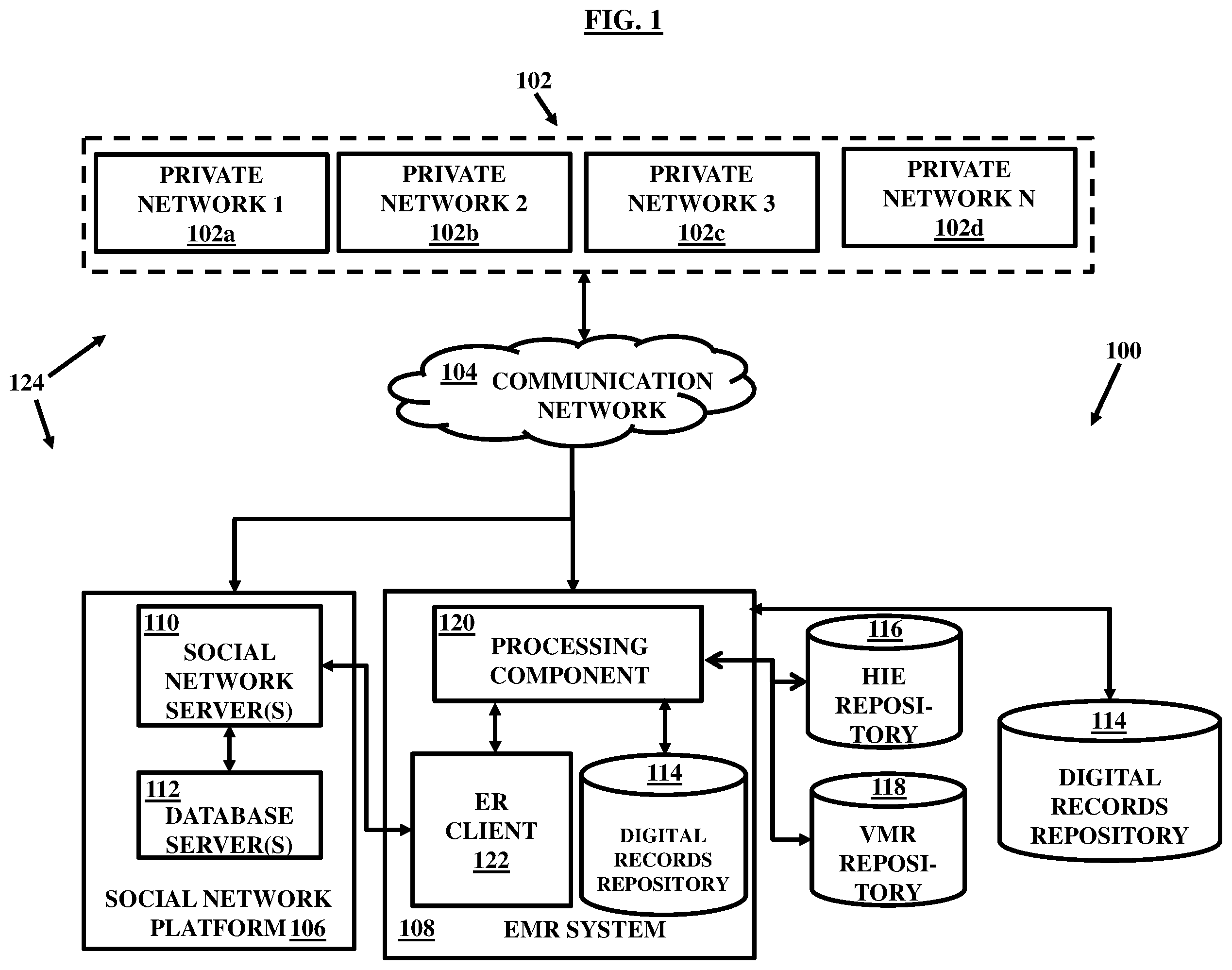
- FIG. 1 illustrates generally, but not by the way of limitation, among other things, an example of an operating environment in which an embodiment may operate;
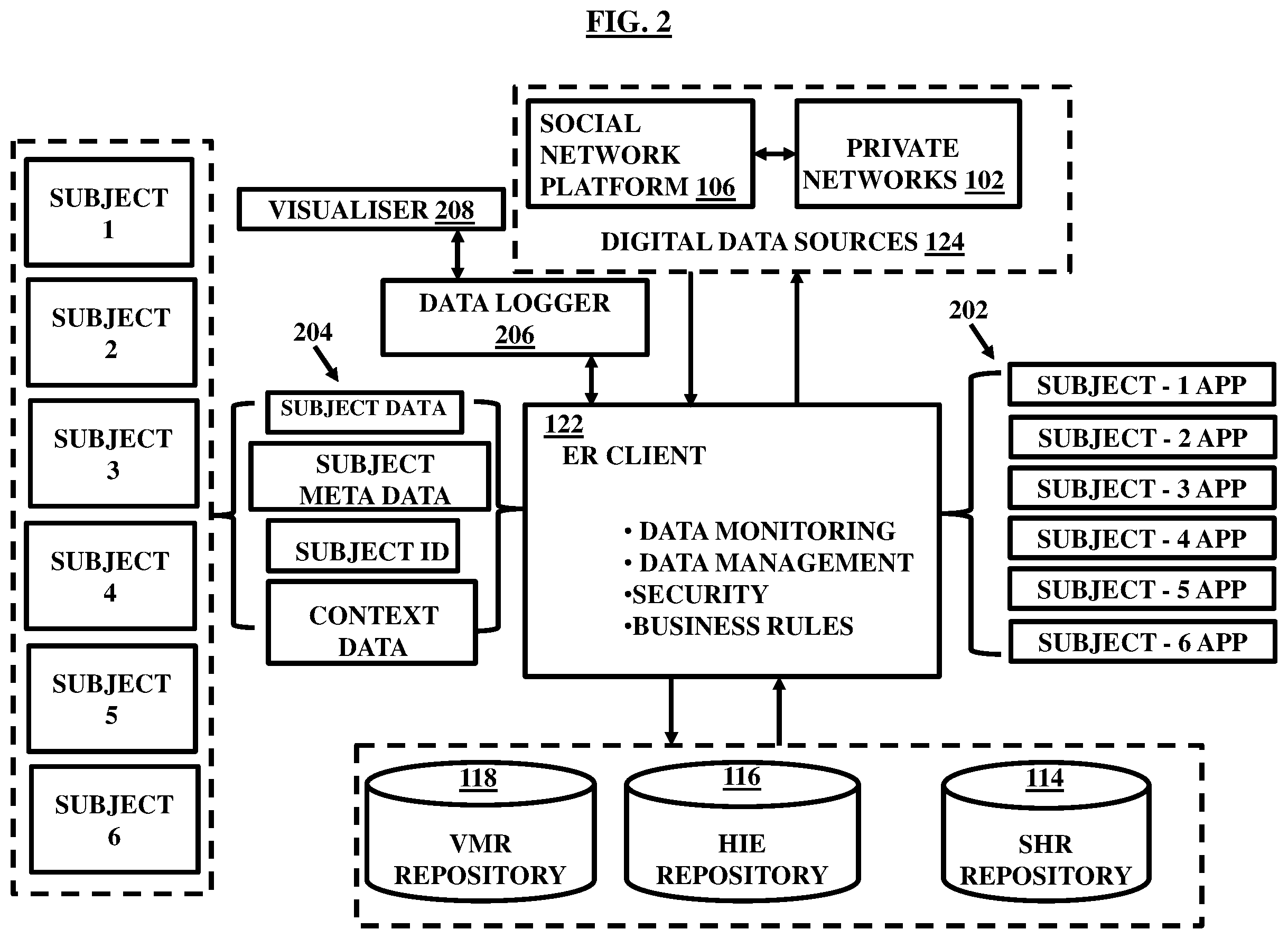
- FIG. 2 illustrates generally, but not by the way of limitation, among other things, an ER client such as described in FIG. 1 , in accordance with an embodiment;
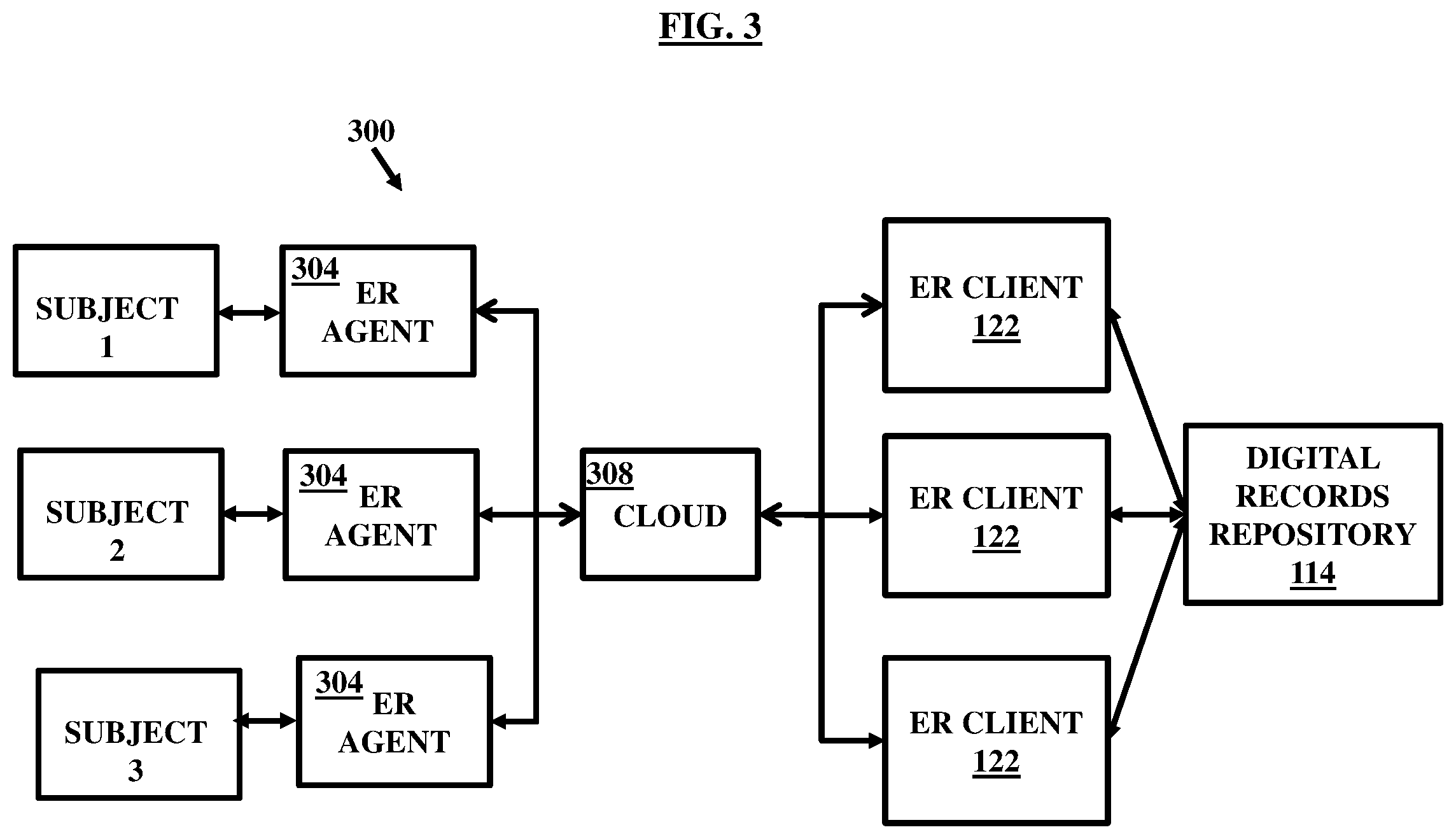
- FIG. 3 is a schematic diagram that illustrates generally, but not by the way of limitation, an exemplary cloud computing architecture, in accordance with an exemplary embodiment;
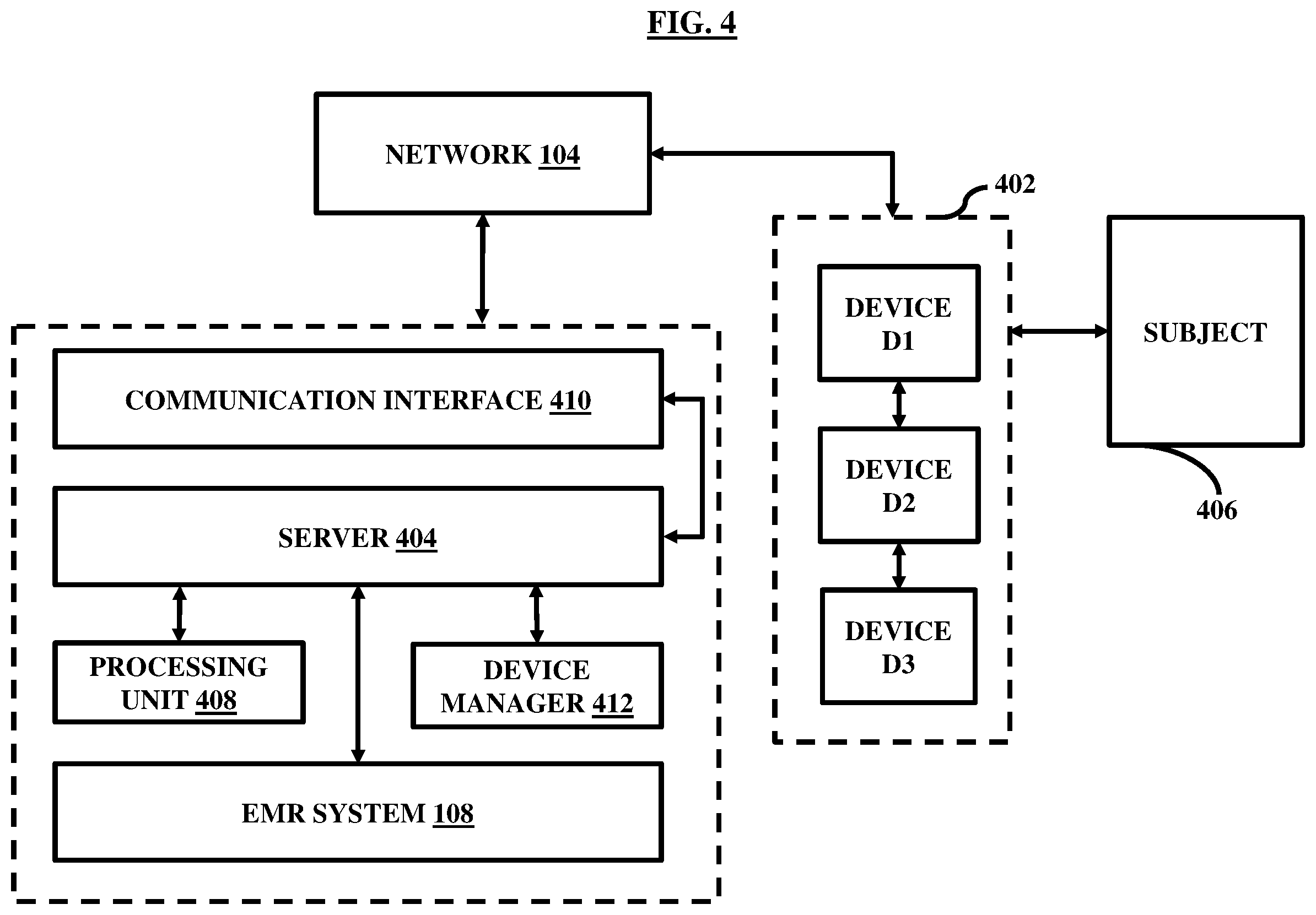
- FIG. 4 illustrates generally, but not by the way of limitation, a plurality of medical devices connected with an EMR system, in accordance with an embodiment;
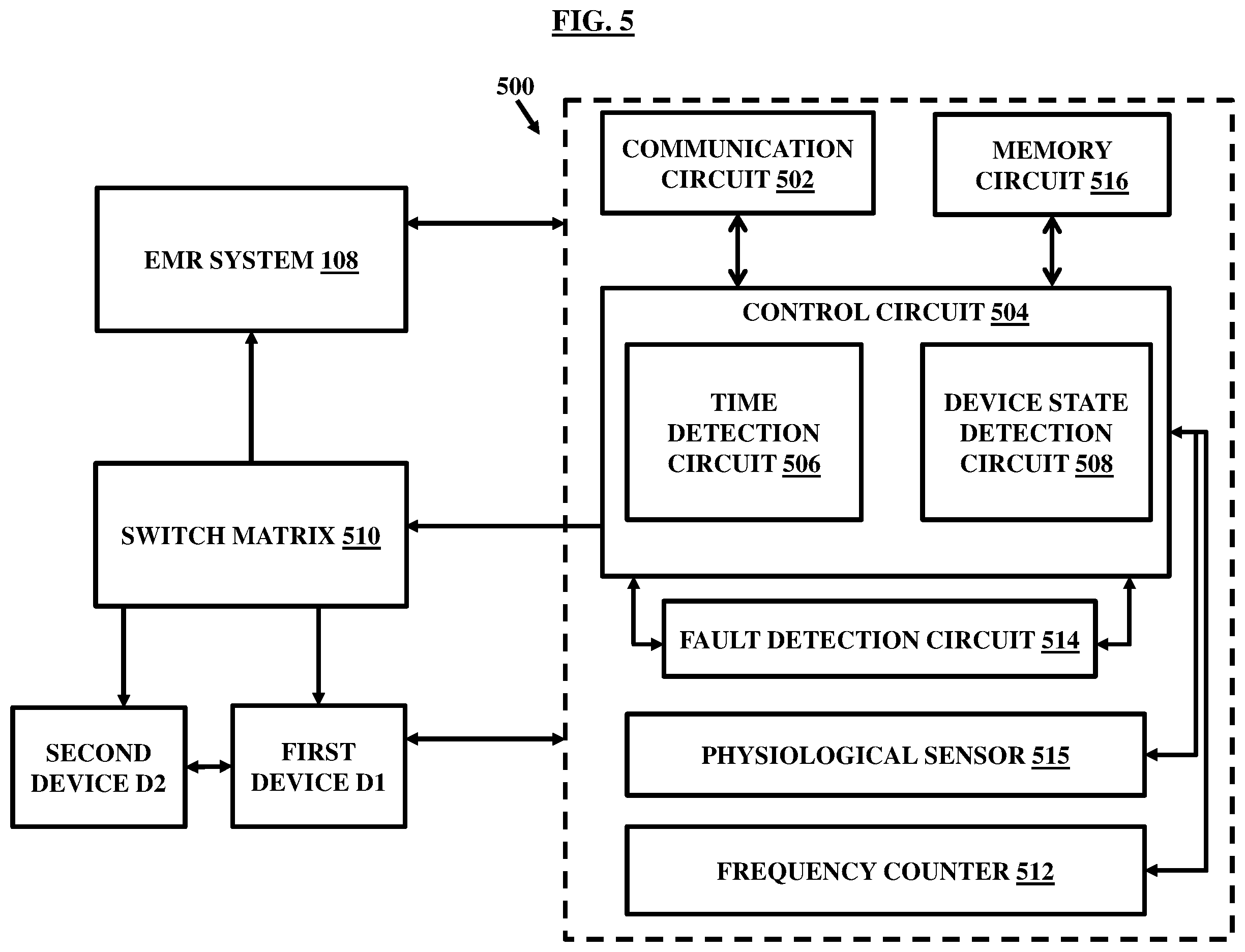
- FIG. 5 illustrates, generally but not by the way of limitation, a system for facilitating coordination and control among a plurality of medical devices, in accordance with an embodiment;
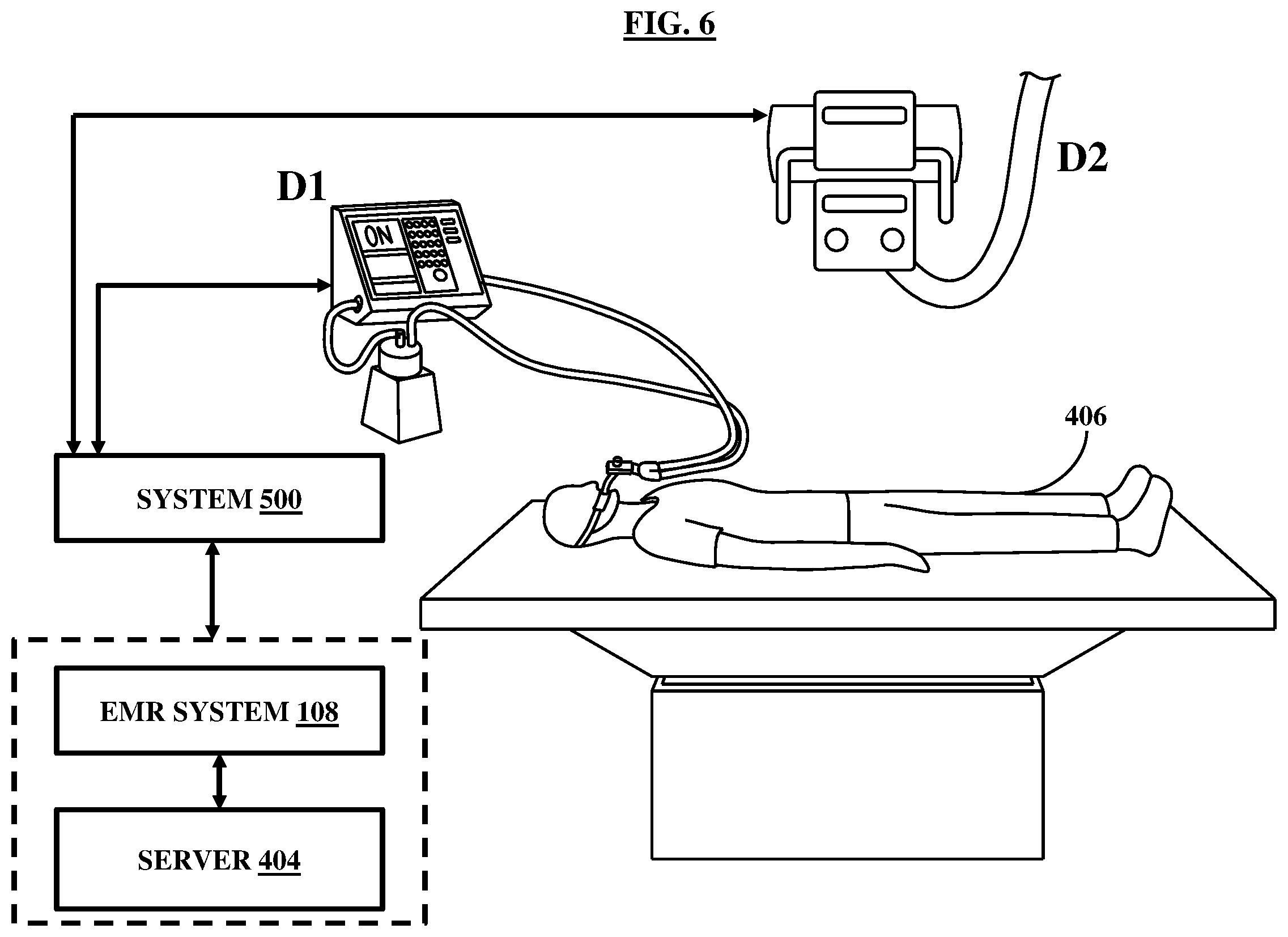
- FIG. 6 illustrates, generally but not by the way of limitation, an example of a first medical device and a second medical device coordinating in a network before switching their operating states, in an embodiment;
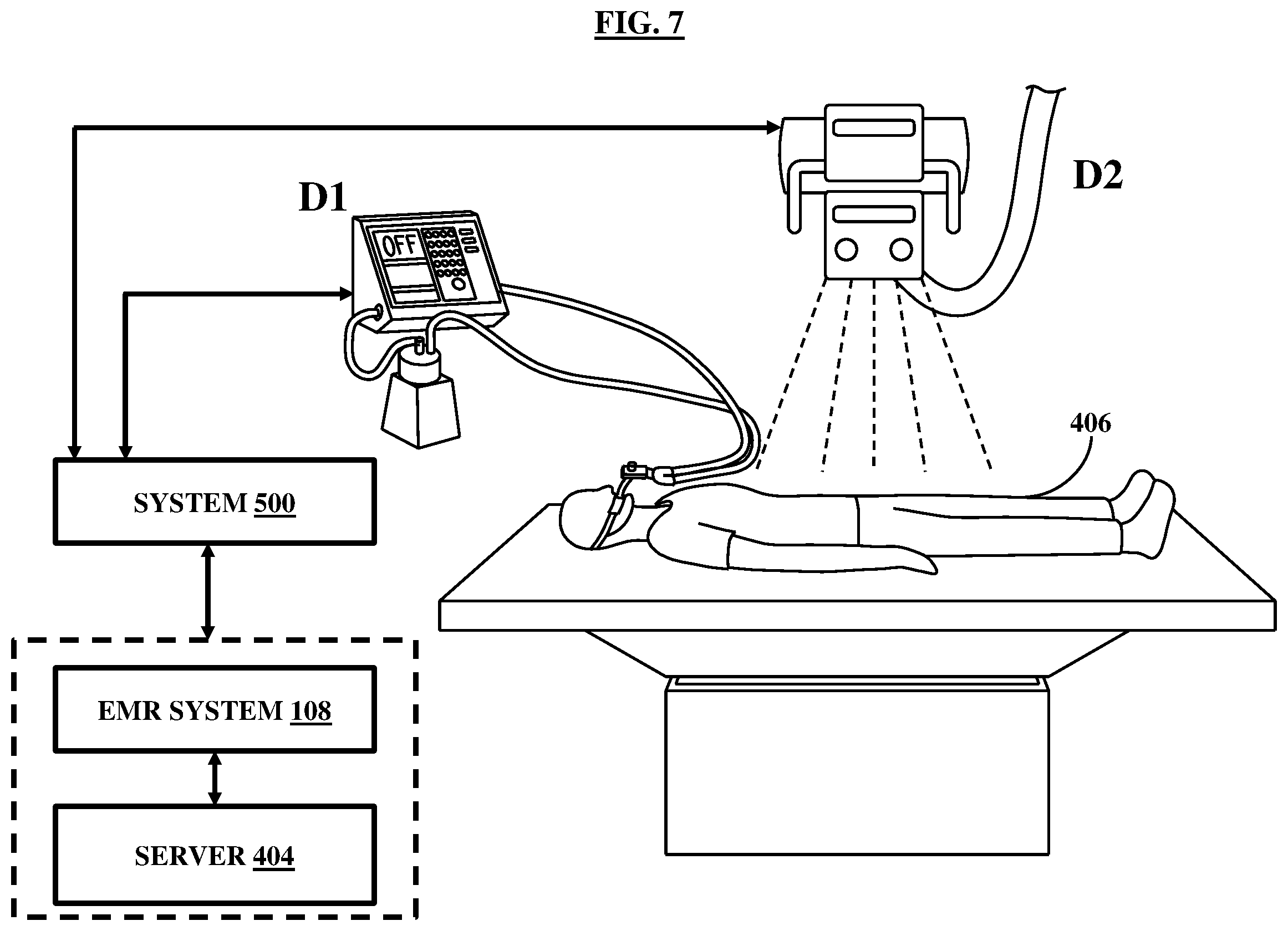
- FIG. 7 illustrates, generally but not by the way of limitation, an example of the first medical device and the second medical device coordinating in the network after switching their operating states, in accordance with an embodiment;
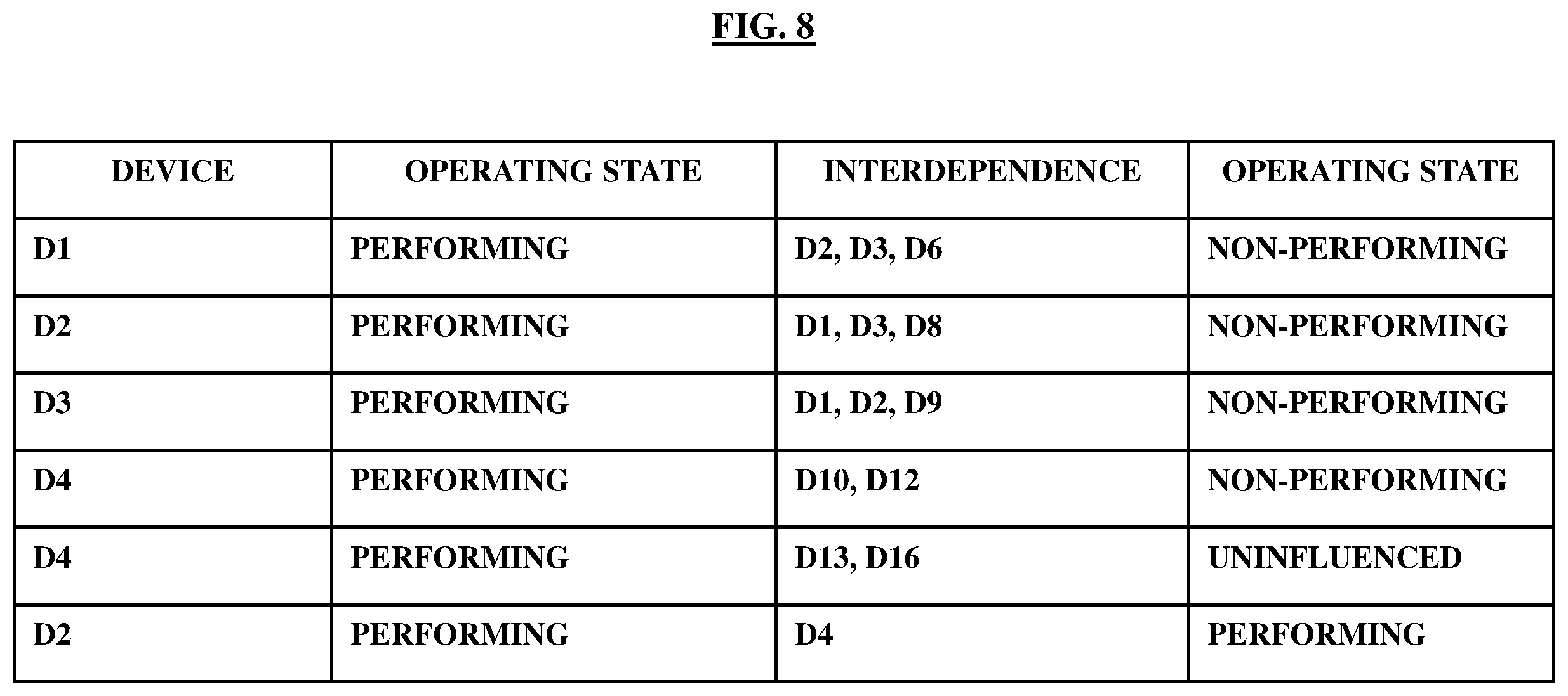
- FIG. 8 illustrates an exemplary lookup table depicting interdependence among a plurality of medical devices, in accordance with an embodiment;
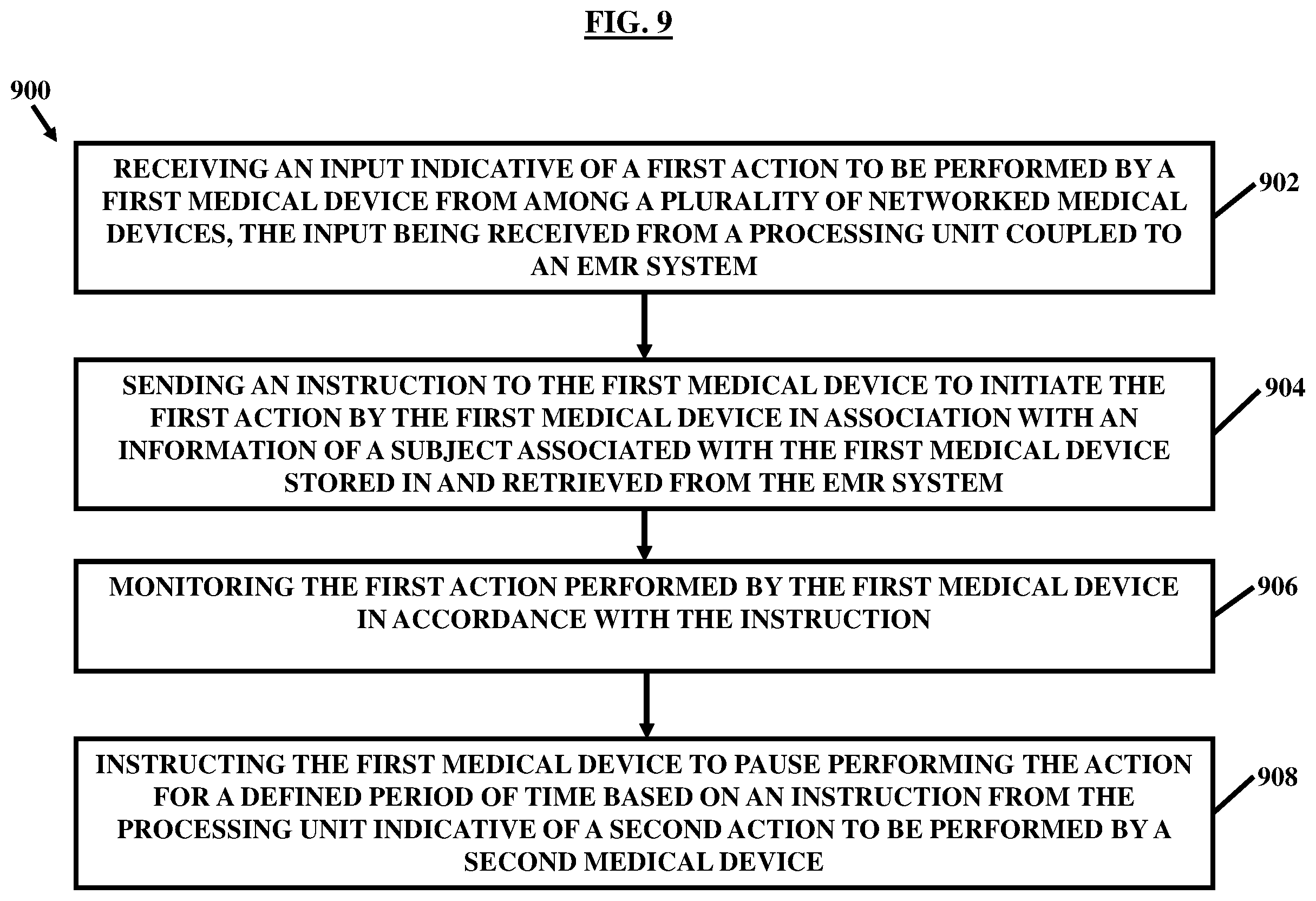
- FIG. 9 illustrates a method for facilitating coordinated functioning of a plurality of medical devices, in accordance with an embodiment;
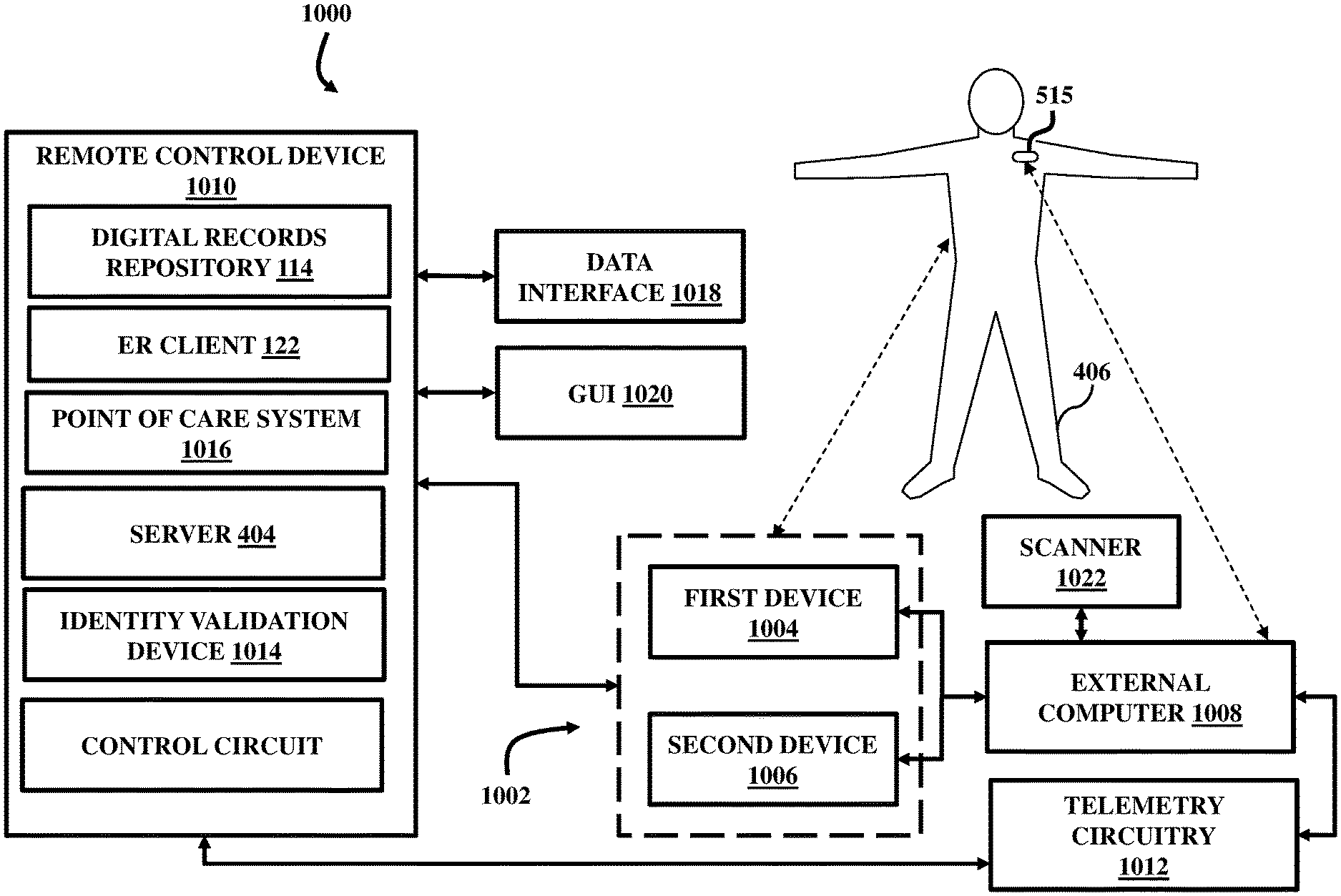
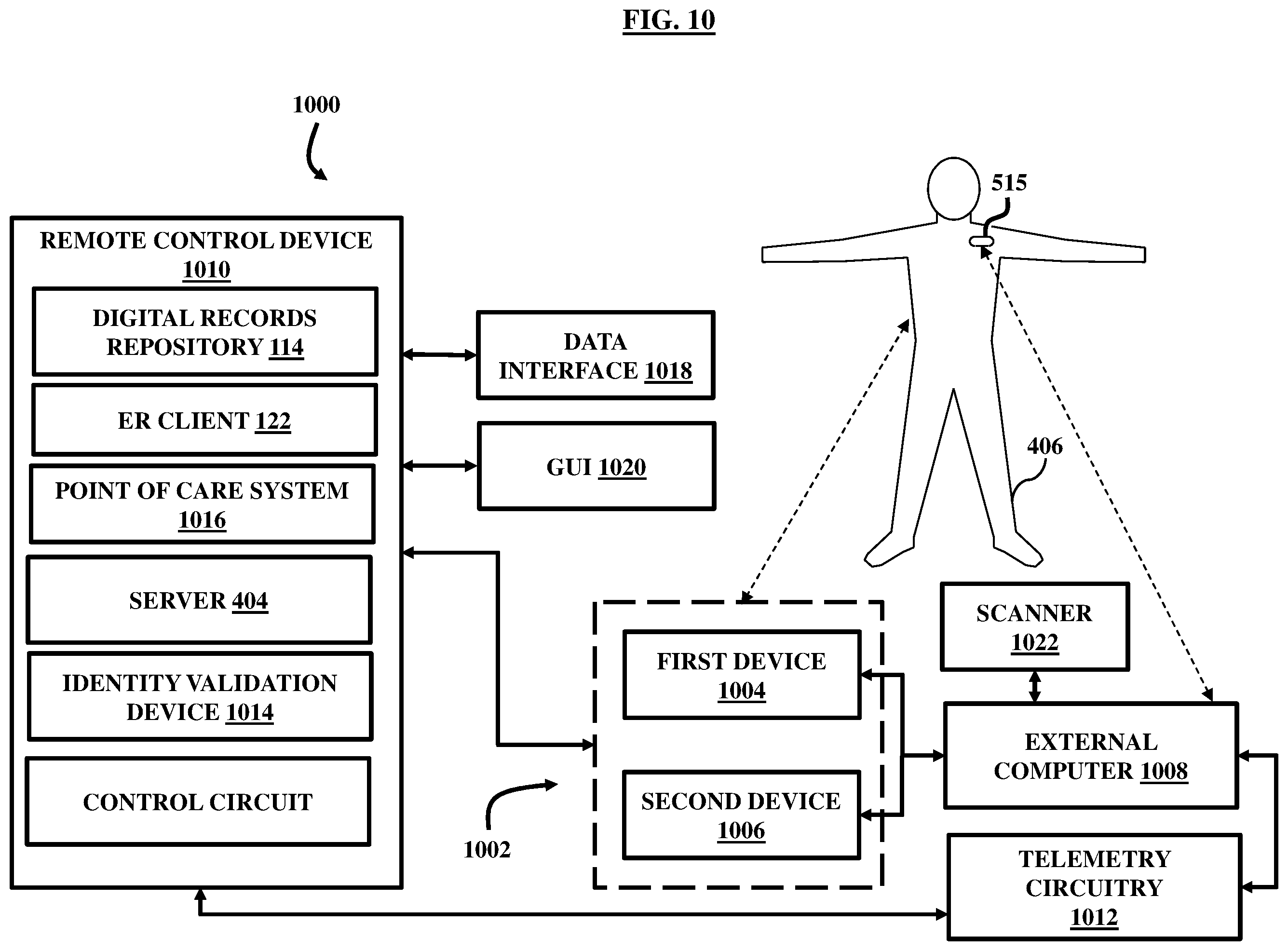
- FIG. 10 illustrates an exemplary remote-control device in association with a multi-device module, in accordance with an embodiment;
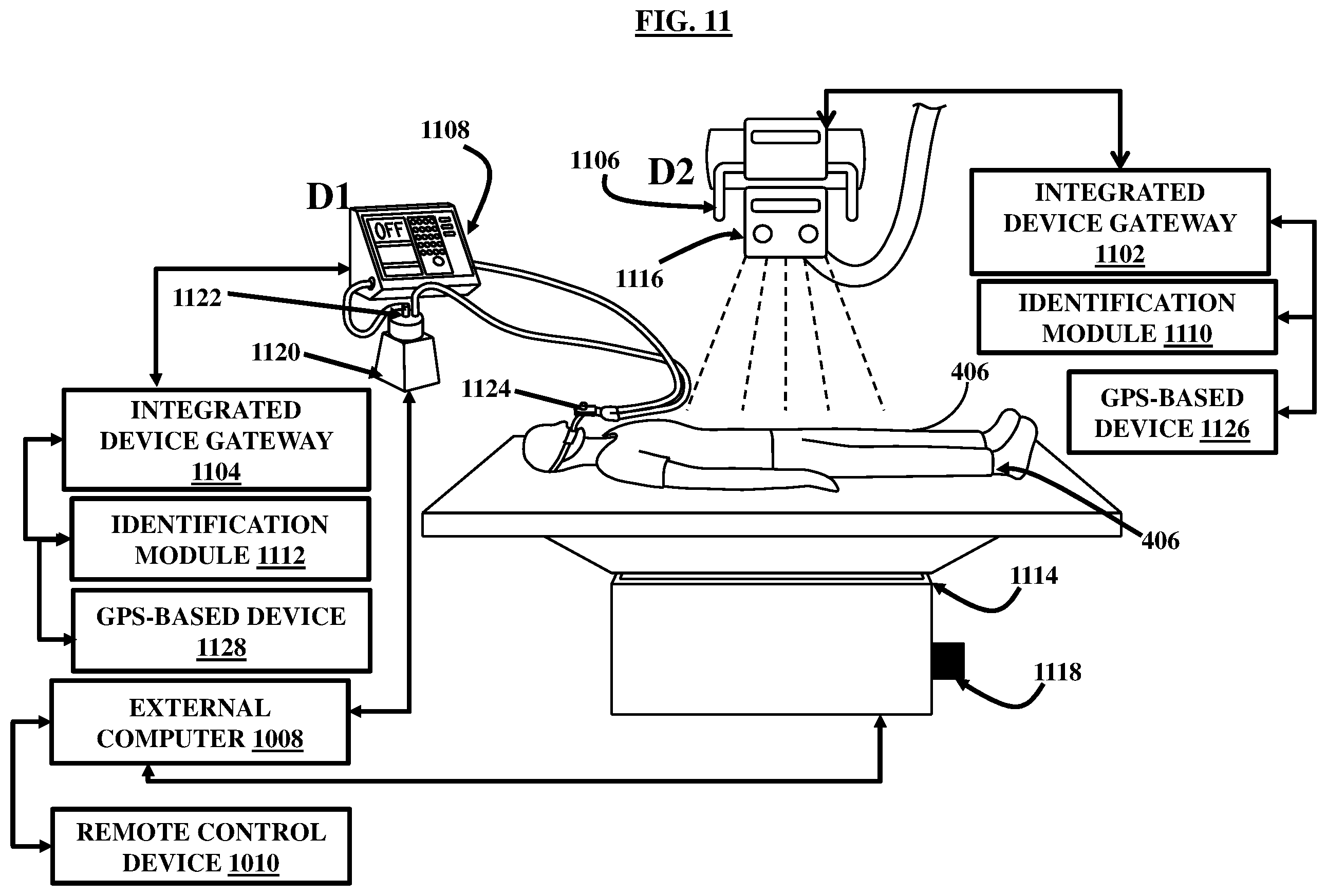
- FIG. 11 illustrates an exemplary multi-device module, in accordance with an embodiment;
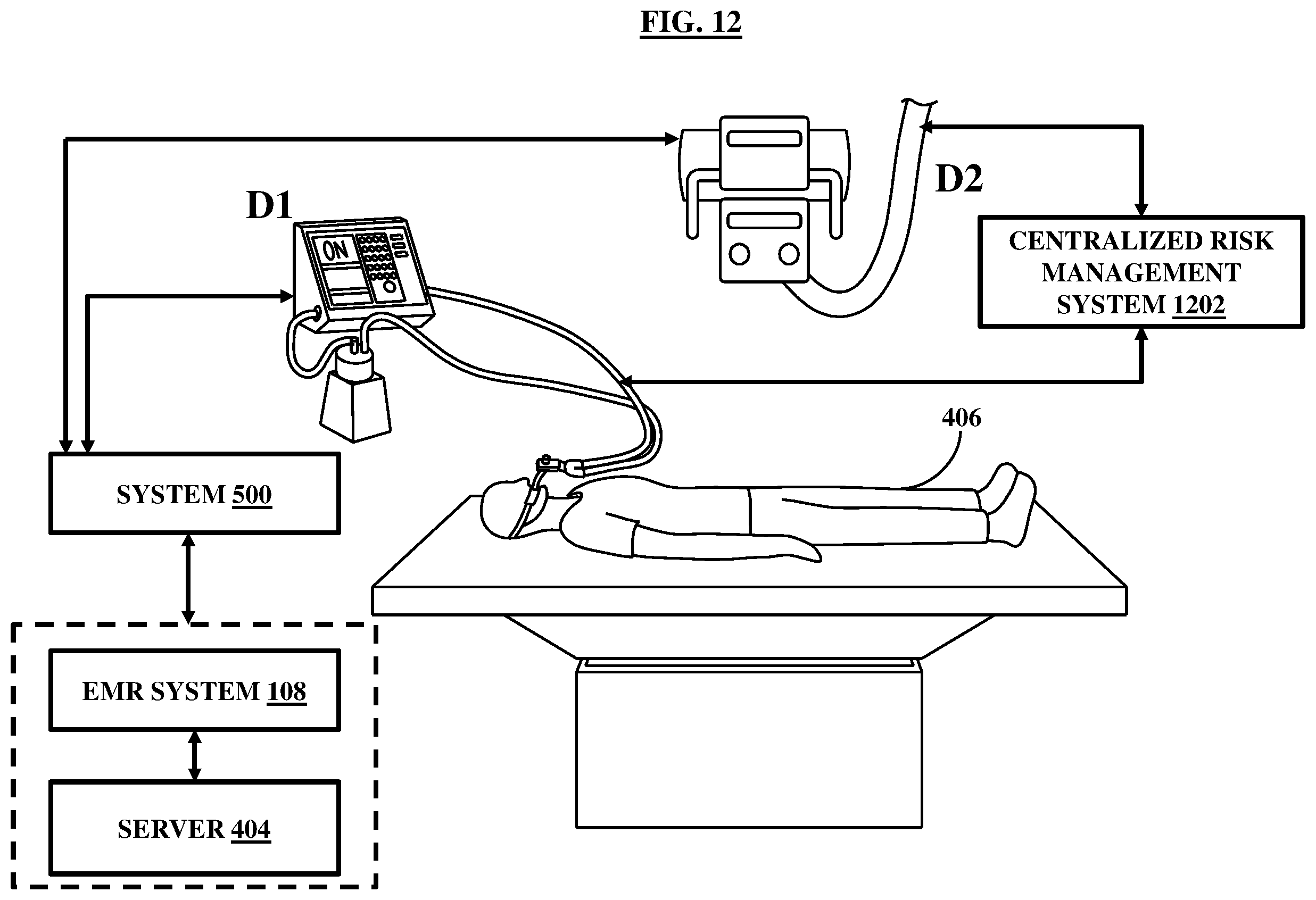
- FIG. 12 illustrates an exemplary centralized system linked with medical devices, in accordance with an embodiment; and
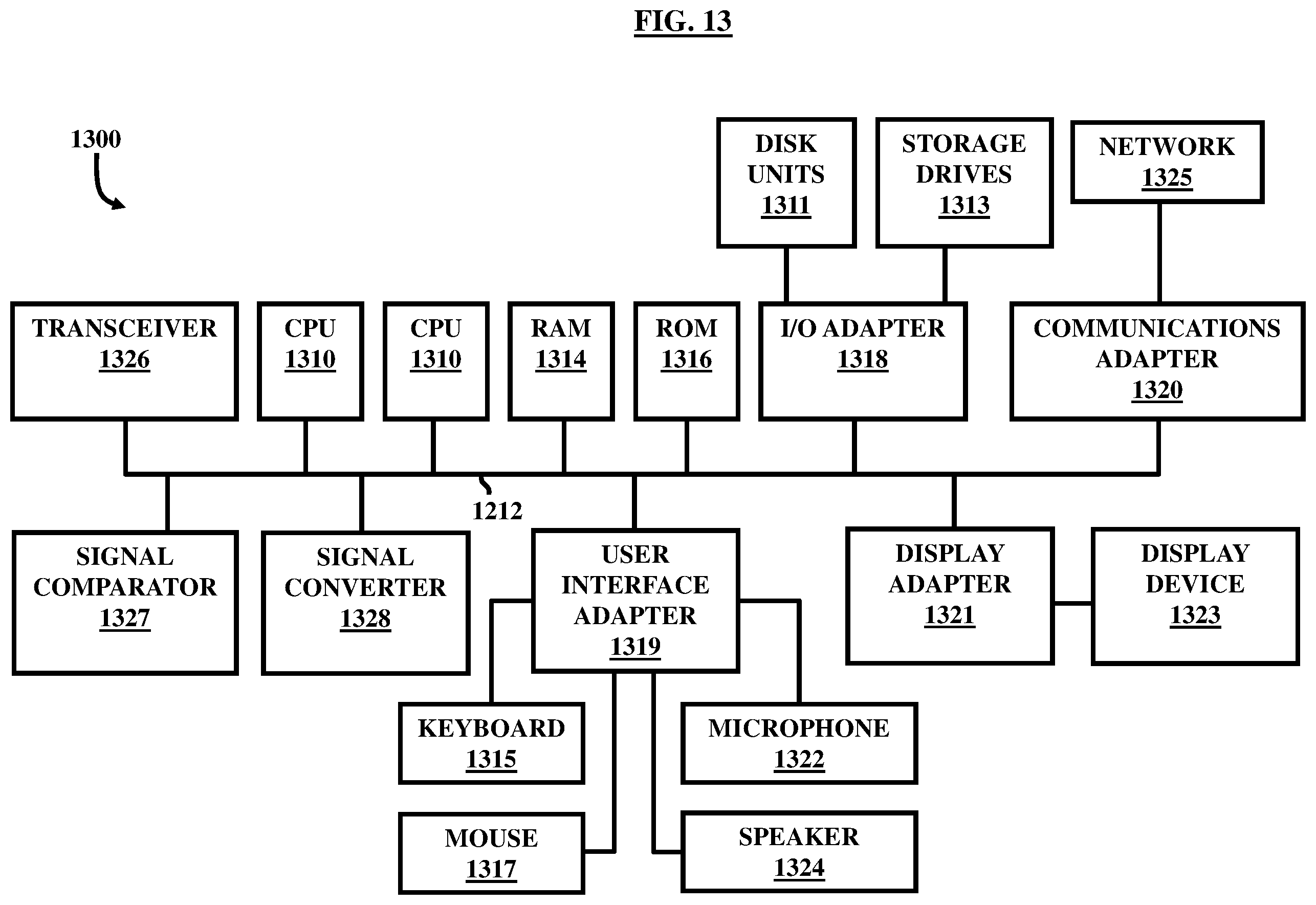
- FIG. 13 illustrates generally, but not by the way of limitation, a computer system that may be used in accordance with the embodiments herein.
Abstract
Controlling a multi-device module includes a physiological sensor configured to sense physiological characteristics of a subject and generate a signal indicative of an instantaneous physiological state. A first device is configured to generate a first signal indicative of an operating state of the first device. A second device is configured to generate a second signal indicative of an operating state of the second device. A remote-control device includes a repository for storing computer executable files aggregated from a plurality of changing private networks. The remote-control device includes an electronic record (ER) client to make a wireless connection with each of the private networks and to query ER database associated with the private networks for electronic records residing within the private networks.
Summary of the invention
An embodiment herein provides a system for controlling multiple devices, the system comprising a physiological sensor associated with a body of a subject and configured to sense one or more physiological characteristics of the subject and generate a digital physiological signal indicative of an instantaneous physiological state of the subject; a first device configured for bi-directional wireless communication positioned proximate to the subject and comprising a first memory circuit and a first processor, wherein the first device is configured to generate a first signal indicative of an operating state of the first device, and wherein the operating state comprising one of a performing state and a non-performing state of the first device; a second device configured for bi-directional wireless communication positioned proximate to the subject and comprising a second memory circuit and a second processor, wherein the second device is configured to generate a second signal indicative of an operating state of the second device, wherein the operating state comprising one of a performing state and a non-performing state of the second device, and wherein the first device and the second device are configured to perform one of a therapeutic, diagnostic, and a medication delivery task on the subject in accordance with computer-enabled instructions; a computer with telemetry circuitry for communicating with the physiological sensor, the first device, and the second device; and a remote-control device positioned apart from the physiological sensor, the first device, and the second device.
The remote-control device comprises a digital records repository comprising a memory circuit and a processing unit for storing dynamically updating computer executable files aggregated from a plurality of changing private networks wherein the computer executable files contain dynamically updating digitally recorded information indicative of a set of changing subject attributes and respective changing reference values associated with the subject; an electronic record (ER) client configured to make a wireless connection with each of the private networks and configured to query an ER database associated with each of the private networks for electronic records residing within the private networks; a server machine configured for communicating with the physiological sensor, the first device, and the second device either directly or through the computer, wherein the server machine is configured for receiving the digital physiological signal indicative of the instantaneous physiological state of the subject and sending programmable operational parameters to the first device and the second device in response to a request for service from the computer and based on the instantaneous physiological state such that the operating parameters decides operating characteristics of the first device and operating characteristics of the second device and the operating characteristics of the first device and the operating characteristics of the second device are interdependent through a priority and interdependence relationship, wherein at least one of the physiological sensor, the first device, the second device, and the computer transforms the received operating parameters into a digital data structure readable by a scanner; and an identity validation device to verify an identity of the first device and the second device and associate a subject identifier uniquely representing the subject with the first device and the second device based on information contained within the physiological signal such that the operating parameters are calculated based on one or more of the reference values associated with the subject having the unique subject identifier as identified based on the physiological signal.
The physiological sensor may be implanted within the body of the subject subcutaneously. The physiological sensor may be associated with the subject as an external device. The physiological sensor may be configured for the subject such that the digital physiological signal contains the subject identifier along with an information indicative of the instantaneous physiological state of the subject. The remote-control device may be configured to associate the subject identifier with the computer executable files stored in the digital records repository to retrieve the reference values associated with the subject and generate an output indicative of the operational parameters of the first device and the second device based on the physiological signal and the retrieved reference values associated with the subject. The operational parameters may comprise any of changing an operating state of the first device only for a first period of time; changing an operating state of the second device only for a second period of time; changing an operating state of both the first device and the second device for a third period of time; and connecting a third device different from the first device and the second device by associating an operating state with the third device in association with the subject for a fourth period of time, wherein each of the first device, the second device, and the third device are uniquely identified by device identifiers such that the digital records repository stores the digital identifiers in a device manager in association with the subject identifier.
The full summary
Any of the server machine and the computer may further comprise a switch matrix configured to cause switching of the operating state of the one or more of the first device, second device, and the third device upon receipt of the operational parameters from the remote-control device in accordance with the priority and interdependence relationships. The remote-control device may further comprise a time detection circuit configured to monitor the first period of time, second period of time, third period of time, and the fourth period of time. The system may further comprise a device state detection circuit coupled to the time detection circuit and configured to identify an operating state of the first device, second device, and the third device after completion of the first period of time, the second period of time, the third period of time, and the fourth period of time. The system may further comprise a fault detection circuit configured to generate a signal indicative of a fault when the device state detection circuit does not detect a change in operating states of either of the first device, second device, or the third device in accordance with the operational parameters transmitted by the remote-control device. The first device may comprise a ventilator and the second device may comprise an X-ray machine such that the remote-control device causes the ventilator to perform a first action upon receipt and the X-ray machine to perform a second action upon receipt of the operational parameters.
The remote-control device may comprise an electronic medical record (EMR) system configured to house a plurality of digital records associated with a plurality of subjects including the subject in the form of a plurality of digital files including the computer executable files associated with the subject, wherein the EMR system comprising the digital records repository; the electronic record (ER) client; a mobile point of care system to capture subject-associated digital data at a point of care wherein the point of care system is communicatively connected with the electronic record (ER) client so as to transmit the electronic records captured by the mobile point of care system from the private networks to the server machine; a data interface, in communication with the mobile point of care system, to facilitate transmission of the electronic records to the server machine; and a web-based interactive graphical user interface for allowing the subject to enter the digital records manually from a distant location. The digital data structure may comprise a QR (quick response) code.
Another embodiment provides a multi-device system comprising a first medical device configured for bi-directional wireless communication positioned proximate to a subject and comprising a first memory circuit and a first processor, wherein the first medical device is configured to generate a first signal indicative of an operating state of the first medical device, and wherein the operating state comprising one of a performing state and a non-performing state of the first medical device; and a second medical device configured for bi-directional wireless communication positioned proximate to the subject and comprising a second memory circuit and a second processor, wherein the second medical device is configured to generate a second signal indicative of an operating state of the second medical device, and wherein the operating state comprising one of a performing state and a non-performing state of the second medical device.
Each of the first medical device and the second medical device comprise an integrated gateway device configured to have a multiple interface unit comprising data interface units configured to send medical operation measurements in conformity with one or more operational parameters received via any of a wired and wireless communication network; a medical device housing to contain device accessories and circuitry; one or more of a therapeutic delivery device, a medication delivery device, and a diagnosis device physically contained within the medical device housing and configured to perform one of a therapeutic, diagnostic, and a medication delivery task; an identification module to contain digitally stored information indicative of device identifier and configured to be transmitted to other devices upon request for device identification; and a computer with telemetry circuitry for communicating with a physiological sensor, the first device, and the second device, wherein the computer is configured to receive a physiological signal from the associated physiological sensor configured for a subject; transmit a subject identifier, a first medical device identifier associated with the first medical device, and a second medical device identifier associated with the second medical device along with a service request to a remote-control device positioned apart from the physiological sensor, and wherein the remote-control device is configured to fulfill the service request based on information contained in a plurality of dynamically updating computer executable files from a plurality of digital data sources and stored in an EMR system configured within the remote-control device; and receive the one or more operational parameters from the remote-control device in response to a service request from the computer and based on an instantaneous physiological state as identified from the physiological signal such that the one or more operating parameters decides operating characteristics of the first medical device and operating characteristics of the second medical device, wherein the operating characteristics of the first medical device and the operating characteristics of the second medical device are interdependent through a priority and interdependence relationship.
The first medical device may comprise a medical imaging machine for imaging of a target including a tissue or a bone structure within a body of a subject, the medical imaging machine comprising a rotatable drive shaft; an imaging device supported on the rotatable drive shaft, the imaging device adapted to transmit energy toward the target; a position adjustment mechanism coupling with the rotatable shaft to allow adjustment of the rotatable drive shaft in order to focus transmission of the energy at the target; the integrated gateway device; and the identification module. The energy may comprise X-rays and the imaging machine may comprise an X-Ray machine.
The second medical device may comprise a life support system comprising an oxygen source that includes a tank of pressurized gas; one or more control valves disposed over a channel connecting the oxygen source and the subject to allow the oxygen to flow from the tank to a laryngeal mask in a first state and to allow gas expelled from the subject to flow from the laryngeal mask to the atmosphere in a second state while preventing the oxygen from flowing from the oxygen source in a second state; the laryngeal mask disposed downstream from the inspiration control valve, the laryngeal mask configured to form an air seal with the subject's respiratory tract such that the oxygen flows from the oxygen source to the lungs of the subject; a timer for synchronizing actuation of the one or more control valves based on the operational parameters received from the remote-control device containing the EMR system; the integrated gateway device; and the identification module. The life support system may comprise a ventilator. Each of the first medical device and the second medical device may comprise a respective (Global Positioning System) GPS-based device such that the GPS-based device is configured to detect geo-locations of the respective first medical device and the second medical device, wherein the remote-control device receives the detected geo-locations of the first medical device and the second medical device, and the remote-control device automatically correlates the subject identifier for the subject associated with the first medical device and the second medical device and initiates functioning in context of the subject as and when the EMR system is proximate to the subject associated with the first medical device and the second medical device. The computer may be configured to transform the operating parameters received from the remote-control device into a digital data structure, the system further comprising a scanner communicatively coupled to the computer such that the digital data structure is readable by the scanner.
Independent claims
Claim 1
A system comprising: a sensor that senses one or more physiological characteristics of a physiological subject and generates a digital signal indicative of an instantaneous physiological state of the subject; at least one electronic device that generates signals corresponding to an operating state of the at least one electronic device, wherein the at least one electronic device performs one of a therapeutic, diagnostic, and a medication delivery task on the subject based on a pre-programmed set of instructions; a database that stores changing computer-executable files aggregated from a plurality of changing private networks, wherein the computer-executable files contain dynamically updating digitally recorded information indicative of a set of changing subject attributes and respective changing reference values associated with the subject; a server communicatively linked to the sensor and the at least one electronic device, wherein the server receives the digital signal indicative of the instantaneous physiological state of the subject and transmits programmable operational parameters to the at least one electronic device based on the instantaneous physiological state; and an identity validation device that verifies an identity of the at least one electronic device and associates a subject identifier uniquely representing the subject with the at least one electronic device based on information contained within the digital signal such that the operational parameters are dependent on the reference values associated with the subject.
Claim 14
A system comprising: a sensor that detects physiological data associated with a subject; a plurality of electronic devices communicatively linked to the sensor, wherein the plurality of electronic devices generate a plurality of signals indicative of an operating state of the plurality of electronic devices, and wherein said operating state comprises one of a performing state and a non-performing state of the plurality of electronic devices; an integrated gateway device communicatively linked to each of the plurality of electronic devices, wherein the integrated gateway device transmits medical operation measurements of the subject in conformity with one or more operational parameters associated with the plurality of electronic devices; at least one of a therapeutic delivery device, a medication delivery device, and a diagnosis device that perform one of a therapeutic, diagnostic, and a medication delivery task on the subject based on the one or more operational parameters associated with the plurality of electronic devices; an identification module that contains digitally stored information for transmission to other electronic devices communicatively linked to the plurality of electronic devices; and a processor communicatively linked with the sensor and the plurality of electronic devices, wherein the processor: receives a signal from the sensor, wherein the signal contains the physiological data; verifies an identity of the plurality of electronic devices based at least on the digitally stored information and associates a subject identifier uniquely representing the subject with at least one of the plurality of electronic devices based on information contained in the physiological data associated with a subject; transmits the subject identifier and a plurality of electronic devices identifier associated along with a service request to a remote-control device positioned apart from the sensor, wherein the remote-control device fulfills the service request based on information contained in a plurality of dynamically updating computer-executable files from a plurality of digital data sources communicatively linked to the remote-control device; and receives the one or more operational parameters from the remote-control device in response to the service request from the processor and based on an instantaneous physiological state as identified from the signal such that said one or more operating parameters decides operating characteristics of the plurality of electronic devices.
All 20 claims
- A system comprising: a sensor that senses one or more physiological characteristics of a physiological subject and generates a digital signal indicative of an instantaneous physiological state of the subject; at least one electronic device that generates signals corresponding to an operating state of the at least one electronic device, wherein the at least one electronic device performs one of a therapeutic, diagnostic, and a medication delivery task on the subject based on a pre-programmed set of instructions; a database that stores changing computer-executable files aggregated from a plurality of changing private networks, wherein the computer-executable files contain dynamically updating digitally recorded information indicative of a set of changing subject attributes and respective changing reference values associated with the subject; a server communicatively linked to the sensor and the at least one electronic device, wherein the server receives the digital signal indicative of the instantaneous physiological state of the subject and transmits programmable operational parameters to the at least one electronic device based on the instantaneous physiological state; and an identity validation device that verifies an identity of the at least one electronic device and associates a subject identifier uniquely representing the subject with the at least one electronic device based on information contained within the digital signal such that the operational parameters are dependent on the reference values associated with the subject.
- The system of claim 1 , comprising an interface communicatively linked to a social network platform to facilitate real-time communication associated with the operating state of the at least one electronic device.
- The system of claim 1 , comprising an interface communicatively linked to a social network platform to facilitate real-time communication associated with the subject interacting with at least one electronic device.
- The system of claim 1 , wherein communication to/from the least one electronic device occurs in a blockchain configuration.
- The system of claim 1 , wherein the at least one electronic device comprises: a first electronic device that generates a first signal corresponding to an operating state of the first electronic device, wherein the first electronic device performs one of a therapeutic, diagnostic, and a medication delivery task on the subject based on a first selected set of instructions; and a second electronic device that generates a second signal corresponding to an operating state of the second electronic device, wherein the second electronic device performs one of a therapeutic, diagnostic, and a medication delivery task on the subject based on a second selected set of instructions.
- The system of claim 5 , wherein the operating state of the first electronic device and the operating state of the second electronic device are interdependent such that the operating state of the first electronic device is non-performing when the operating state of the second electronic device is performing, and wherein the server is configured to retrieve information about interdependence of the first electronic device and the second electronic device from a lookup table stored in the database.
- The system of claim 1 , wherein the at least one electronic device comprises a plurality of electronic devices that are communicatively integrated with each other.
- The system of claim 7 , comprising a device manager that detects newly connected electronic devices communicatively linked with the at least one electronic device or with the server.
- The system of claim 1 , comprising a device manager that detects updates affecting an operation of the at least one electronic device.
- The system of claim 1 , wherein the at least one electronic device is configured to detect geo-locations of the at least one electronic device.
- The system of claim 1 , wherein the server comprises a communication interface to communicate with the at least one electronic device.
- The system of claim 1 , wherein the at least one electronic device comprises a medical device.
- The system of claim 1 , comprising a remote-controlled device that controls an operation of the at least one electronic device for performing an action on the subject.
- A system comprising: a sensor that detects physiological data associated with a subject; a plurality of electronic devices communicatively linked to the sensor, wherein the plurality of electronic devices generate a plurality of signals indicative of an operating state of the plurality of electronic devices, and wherein said operating state comprises one of a performing state and a non-performing state of the plurality of electronic devices; an integrated gateway device communicatively linked to each of the plurality of electronic devices, wherein the integrated gateway device transmits medical operation measurements of the subject in conformity with one or more operational parameters associated with the plurality of electronic devices; at least one of a therapeutic delivery device, a medication delivery device, and a diagnosis device that perform one of a therapeutic, diagnostic, and a medication delivery task on the subject based on the one or more operational parameters associated with the plurality of electronic devices; an identification module that contains digitally stored information for transmission to other electronic devices communicatively linked to the plurality of electronic devices; and a processor communicatively linked with the sensor and the plurality of electronic devices, wherein the processor: receives a signal from the sensor, wherein the signal contains the physiological data; verifies an identity of the plurality of electronic devices based at least on the digitally stored information and associates a subject identifier uniquely representing the subject with at least one of the plurality of electronic devices based on information contained in the physiological data associated with a subject; transmits the subject identifier and a plurality of electronic devices identifier associated along with a service request to a remote-control device positioned apart from the sensor, wherein the remote-control device fulfills the service request based on information contained in a plurality of dynamically updating computer-executable files from a plurality of digital data sources communicatively linked to the remote-control device; and receives the one or more operational parameters from the remote-control device in response to the service request from the processor and based on an instantaneous physiological state as identified from the signal such that said one or more operating parameters decides operating characteristics of the plurality of electronic devices.
- The system of claim 14 , wherein the plurality of electronic devices and the integrated gateway device are communicatively linked through the Internet.
- The system of claim 14 , wherein the plurality of electronic devices comprise medical devices.
- The system of claim 14 , comprising a sub-system that detects potential operational threats to the plurality of electronic devices or operational vulnerabilities of the plurality of electronic devices.
- The system of claim 17 , wherein the sub-system establishes a trust factor associated with each of the plurality of electronic devices based on the detected potential operational threats and operational vulnerabilities associated with the plurality of electronic devices.
- The system of claim 18 , wherein the trust factor determines whether a particular electronic device of the plurality of electronic devices is to be used.
- The system of claim 14 , wherein the remote-controlled device controls an operation of the plurality of electronic devices for performing an action on the subject.
Related patents
- Continuation of US10638999B2 System For Controlling Medical Devices
Every patent of the System For Controlling Medical Devices family: US20130204145A1, US10638999B2.
Explained in plain language and in context
Patent summaries
- The Complexities of Data Management in Contemporary Healthcare Solutions
Contemporary healthcare solutions for efficient data management and real-time patient care in modern medical facilities
Market potential
- Revolutionizing Healthcare - The Future of Medical Devices Operation Automation
Many medical devices still require manual setup and operation, which introduces the potential for human error.
Podcast episodes
- System for controlling medical devices - US11006920B2
Controlling a multi-device module includes a physiological sensor configured to sense physiological characteristics of a subject and generate a signal indicative of an instantaneou
Licence or acquire US11006920B2
Available for an exclusive or non-exclusive licence, field-of-use licences included, or for acquisition. Terms on inquiry. Ask about the whole family or any one of its patents.
Or write to hello+ip@intellectualfrontiers.com. A person answers.
Questions
Is US11006920B2 available for licensing?
Yes. Intellectual Frontiers offers US11006920B2, with the rest of the System For Controlling Medical Devices family, for an exclusive or non-exclusive licence, field-of-use licences included. Terms are agreed on inquiry: write to hello+ip@intellectualfrontiers.com.
Can US11006920B2 be bought?
Yes. US11006920B2 is available for acquisition, alone or with its family. Terms are agreed on inquiry: write to hello+ip@intellectualfrontiers.com.
What is the status of US11006920B2?
Patented Case as of 28 April 2021, according to the USPTO record read 27 September 2026.
What does US11006920B2 cover?
Controlling a multi-device module includes a physiological sensor configured to sense physiological characteristics of a subject and generate a signal indicative of an instantaneous physiological state. A first device is configured to generate a first signal indicative of an operating state of the first device. A second device is configured to generate a second signal indicative of an operating st A plain-language summary is at https://www.intellectualfrontiers.com/patent-summaries/the-complexities-of-data-management-in-contemporary-healthcare-solutions.
Which patents are related to US11006920B2?
It is part of the System For Controlling Medical Devices family, with US20130204145A1, US10638999B2.
Who invented US11006920B2 and who holds it?
Shahid N. Shah is the inventor. Intellectual Frontiers LLC holds the rights.